From Kickoff to Dataset: Building the Ultimate World Cup 2026 Data Archive for AI Models
Why World Cup 2026 Is an AI Goldmine
Every four years, the World Cup produces a unique dataset: 48 teams, 104 matches, thousands of players, millions of events, and billions of social interactions. For AI researchers and sports tech companies, this isn’t just entertainment—it’s training data that can’t be replicated.
But there’s a catch. Once the tournament ends, the data disperses. Videos get deleted. Stats pages get archived. Social posts disappear into algorithmic voids. If you don’t capture it in real-time, it’s gone.
This guide is about building the infrastructure to capture, structure, and preserve World Cup 2026 data for machine learning applications.
What You’re Really Building
A World Cup data archive isn’t just a spreadsheet of scores. For AI training, you need:
Table
| Data Type | ML Application | Collection Challenge |
|---|---|---|
| Match events (goals, passes, tackles) | Action recognition, prediction models | Real-time APIs throttle during peak |
| Player tracking (position, speed, heatmaps) | Computer vision, player analysis | Proprietary broadcast data, expensive |
| Video footage (broadcast, highlights) | Video understanding, highlight generation | Geo-restricted, platform-specific |
| Social sentiment (tweets, comments, trends) | NLP, fan behavior prediction | Volume spikes 100x during goals |
| News and commentary (articles, podcasts) | Text summarization, translation | Multi-language, scattered sources |
| Historical context (past tournaments, player careers) | Foundation models, trend analysis | Locked in paywalled databases |
No single provider gives you all of this. You need to build a multi-source collection pipeline—and that pipeline needs to survive the World Cup’s traffic tsunami.
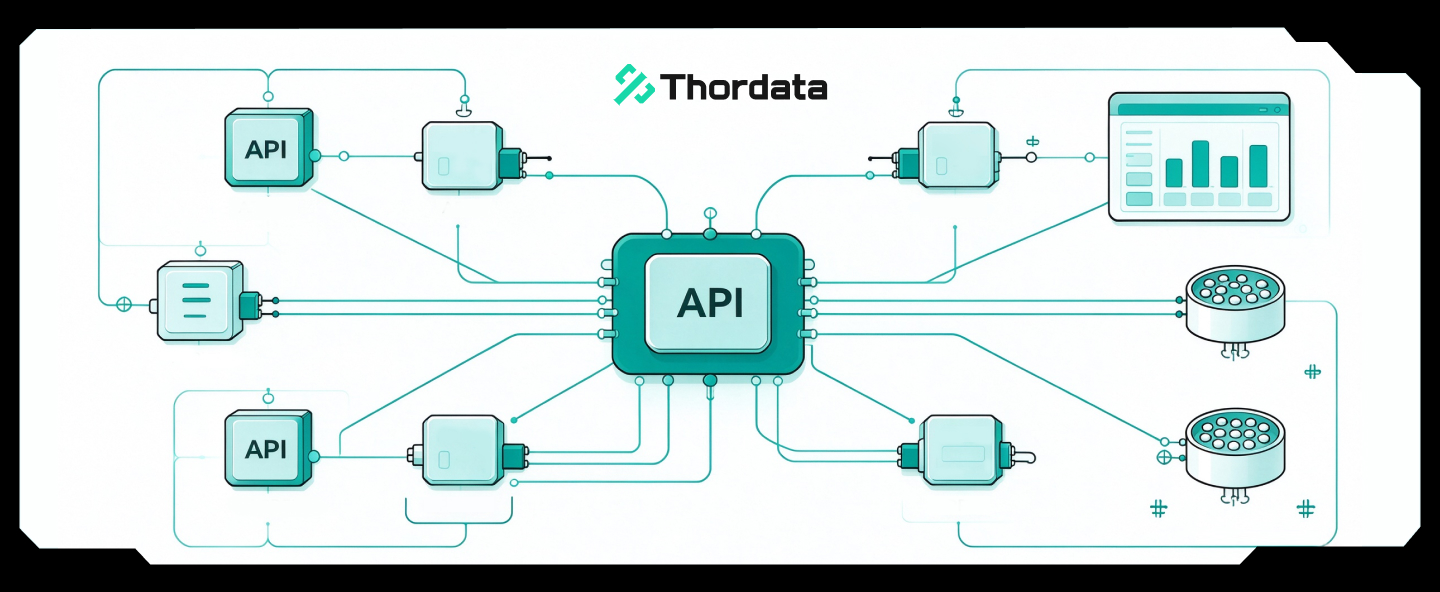
The Architecture: From Raw Web to Structured Dataset
┌─────────────────────────────────────────────────────────────┐
│                     COLLECTION LAYER                        │
│  ┌─────────┐  ┌─────────┐  ┌─────────┐  ┌─────────┐       │
│  │  Match  │  │  Video  │  │  Social │  │  News   │       │
│  │  APIs   │  │  Sites  │  │  APIs   │  │  Feeds  │       │
│  └────┬────┘  └────┬────┘  └────┬────┘  └────┬────┘       │
│       │              │              │              │            │
│  ┌────▼──────────────▼──────────────▼──────────────▼────┐   │
│  │              ThorData Residential Proxy Pool           │   │
│  │     (Rotating IPs + Geo-targeting + Sticky Sessions)  │   │
│  └────┬───────────────────────────────────────────────┬──┘   │
│       │                                               │       │
└───────┼───────────────────────────────────────────────┼───────┘
        │                                               │
┌───────▼───────────────────────────────────────────────▼───────┐
│                     PROCESSING LAYER                          │
│  ┌─────────────┐  ┌─────────────┐  ┌─────────────────────┐   │
│  │  Normalize  │  │  Enrich     │  │  Label (Auto +      │   │
│  │  (Schema)   │  │  (Metadata) │  │  Human-in-the-loop) │   │
│  └──────┬──────┘  └──────┬──────┘  └──────────┬──────────┘   │
│         │                │                      │              │
│  ┌──────▼────────────────▼──────────────────────▼──────┐      │
│  │              STORAGE LAYER                          │      │
│  │  Hot: Redis (real-time)                             │      │
│  │  Warm: PostgreSQL (structured)                      │      │
│  │  Cold: S3 Glacier (raw archives)                    │      │
│  └─────────────────────────────────────────────────────┘      │
└───────────────────────────────────────────────────────────────┘
Layer 1: Match Event Collection
The foundation of any sports AI dataset is structured match data. Here’s how to collect it at World Cup scale:
Python
import requests
import json
from datetime import datetime
import redis

# ThorData Residential Proxy with geo-targeting
# Target US IPs for FIFA.com, UK IPs for BBC Sport, etc.
PROXY_POOL = {
    "us": "http://user:pass@gate.thordata.com:10000&country=us",
    "uk": "http://user:pass@gate.thordata.com:10000&country=gb",
    "mx": "http://user:pass@gate.thordata.com:10000&country=mx"
}

class WorldCupDataCollector:
    def __init__(self):
        self.cache = redis.Redis(host='localhost', port=6379, db=0)
        self.dataset = []

    def fetch_match_data(self, match_id, source="fifa"):
        """
        Collect match data with geo-targeted proxy rotation.
        Different sources need different IP locations for full access.
        """
        proxy = PROXY_POOL.get(self._optimal_region(source), PROXY_POOL["us"])

        headers = {
            "User-Agent": "Mozilla/5.0 (Macintosh; Intel Mac OS X 10_15_7) AppleWebKit/537.36",
            "Accept": "application/json",
            "Accept-Language": "en-US,en;q=0.9"
        }

        try:
            # FIFA API (US-based, strict geo-checks)
            if source == "fifa":
                response = requests.get(
                    f"https://api.fifa.com/api/v3/live/football/{match_id}",
                    headers=headers,
                    proxies={"http": proxy, "https": proxy},
                    timeout=10
                )

            # BBC Sport (UK-based, different data structure)
            elif source == "bbc":
                response = requests.get(
                    f"https://push.api.bbci.co.uk/batch?t=/data/bbc-morph-sport-football-match-data/{match_id}",
                    headers=headers,
                    proxies={"http": PROXY_POOL["uk"], "https": PROXY_POOL["uk"]},
                    timeout=10
                )

            response.raise_for_status()
            data = response.json()

            # Cache for 60 seconds (World Cup data changes fast)
            self.cache.setex(f"match:{match_id}", 60, json.dumps(data))

            return self._normalize_match_data(data, source)

        except requests.exceptions.RequestException as e:
            print(f"[{datetime.now()}] Collection failed for {source}: {e}")
            # Fallback to cache if available
            cached = self.cache.get(f"match:{match_id}")
            return json.loads(cached) if cached else None

    def _optimal_region(self, source):
        """Select proxy region based on source geography."""
        region_map = {
            "fifa": "us",      # FIFA API optimized for North America
            "bbc": "uk",       # BBC Sport UK-centric
            "espn": "us",      # ESPN US-focused
            "sportmonks": "eu" # European sports data provider
        }
        return region_map.get(source, "us")

    def _normalize_match_data(self, raw_data, source):
        """
        Convert different API formats to unified schema.
        Critical for ML training consistency.
        """
        normalized = {
            "match_id": raw_data.get("id"),
            "timestamp": datetime.utcnow().isoformat(),
            "source": source,
            "home_team": {
                "name": raw_data.get("homeTeam", {}).get("name"),
                "score": raw_data.get("homeTeam", {}).get("score", 0)
            },
            "away_team": {
                "name": raw_data.get("awayTeam", {}).get("name"),
                "score": raw_data.get("awayTeam", {}).get("score", 0)
            },
            "status": raw_data.get("status"),
            "events": [],
            "statistics": {}
        }

        # Normalize events (goals, cards, substitutions)
        for event in raw_data.get("events", []):
            normalized["events"].append({
                "type": event.get("type"),
                "minute": event.get("minute"),
                "player": event.get("player", {}).get("name"),
                "team": event.get("team", {}).get("name")
            })

        return normalized

    def build_training_sample(self, match_data):
        """
        Convert match data into ML-ready training samples.
        """
        # Feature: Match state at minute X
        # Label: Next event type (goal, card, substitution, none)
        samples = []

        for i, event in enumerate(match_data["events"]):
            sample = {
                "features": {
                    "minute": event["minute"],
                    "home_score": match_data["home_team"]["score"],
                    "away_score": match_data["away_team"]["score"],
                    "event_count": i,
                    "time_since_last_event": self._time_delta(match_data["events"], i)
                },
                "label": event["type"]
            }
            samples.append(sample)

        return samples
Layer 2: Video and Visual Data
For computer vision models, you need footage. But World Cup broadcast rights are fiercely protected. Here’s the ethical, legal approach:
What You CAN Collect
- Public highlights from FIFA’s official YouTube channel
- Fan-uploaded clips (with attribution, for research)
- Thumbnail images and metadata
- Broadcast screenshots (fair use for analysis)
What You CANNOT
- Full match recordings from unauthorized sources
- Paywalled content without subscription
- Content that violates platform Terms of Service
Collection Strategy
Python
from yt_dlp import YoutubeDL

def collect_highlight_metadata(query, max_results=50):
    """
    Discover World Cup highlight videos via SERP + proxy.
    Collect metadata, not full videos (unless public domain).
    """
    # Use SERP API with residential proxy to find videos
    serp_proxy = "http://user:pass@gate.thordata.com:10000"

    # Search for official highlights
    search_query = f"World Cup 2026 highlights {query} official FIFA"

    # yt-dlp for metadata extraction (not download)
    ydl_opts = {
        'quiet': True,
        'extract_flat': True,
        'force_generic_extractor': False,
        'proxy': serp_proxy
    }

    with YoutubeDL(ydl_opts) as ydl:
        results = ydl.extract_info(f"ytsearch{max_results}:{search_query}", download=False)

        videos = []
        for entry in results.get('entries', []):
            videos.append({
                "id": entry.get("id"),
                "title": entry.get("title"),
                "duration": entry.get("duration"),
                "uploader": entry.get("uploader"),
                "view_count": entry.get("view_count"),
                "upload_date": entry.get("upload_date"),
                "url": f"https://youtube.com/watch?v={entry.get('id')}",
                "thumbnail": entry.get("thumbnail")
            })

        return videos
Layer 3: Social and Sentiment Data
World Cup social data spikes 100x during major moments. A single goal can generate 1M+ tweets in 10 minutes. Your collection infrastructure must handle burst traffic.
Python
import tweepy
import requests

class SocialDataCollector:
    def __init__(self):
        self.proxy = "http://user:pass@gate.thordata.com:10000"

    def collect_twitter_stream(self, keywords, duration_minutes=90):
        """
        Collect tweets during live matches using proxy-rotated requests.
        Twitter API v2 has strict rate limits—proxies help distribute load.
        """
        # Note: Twitter API v2 requires authentication
        # This example shows proxy integration for API calls

        tweets = []
        start_time = datetime.utcnow()

        while (datetime.utcnow() - start_time).seconds < duration_minutes * 60:
            try:
                response = requests.get(
                    "https://api.twitter.com/2/tweets/search/recent",
                    headers={"Authorization": f"Bearer {TWITTER_BEARER_TOKEN}"},
                    params={
                        "query": f"({' OR '.join(keywords)}) lang:en",
                        "max_results": 100,
                        "tweet.fields": "created_at,public_metrics,context_annotations"
                    },
                    proxies={"http": self.proxy, "https": self.proxy},
                    timeout=15
                )

                if response.status_code == 429:
                    # Rate limited—proxy auto-rotates on next request
                    time.sleep(60)
                    continue

                data = response.json()
                tweets.extend(data.get("data", []))

                # Respect rate limits
                time.sleep(2)

            except Exception as e:
                print(f"Stream error: {e}")
                time.sleep(5)

        return self._analyze_sentiment(tweets)

    def _analyze_sentiment(self, tweets):
        """Simple sentiment scoring for dataset labeling."""
        from textblob import TextBlob

        labeled = []
        for tweet in tweets:
            text = tweet.get("text", "")
            blob = TextBlob(text)

            labeled.append({
                "text": text,
                "sentiment_polarity": blob.sentiment.polarity,
                "sentiment_subjectivity": blob.sentiment.subjectivity,
                "timestamp": tweet.get("created_at"),
                "engagement": tweet.get("public_metrics", {})
            })

        return labeled
Why Residential Proxies Are Non-Negotiable for AI Data Collection
Building a World Cup dataset requires hitting thousands of sources millions of times. Here’s why residential proxies specifically matter:
Table
| Challenge | Without Proxies | With Residential Proxies |
|---|---|---|
| Source diversity | 5-10 sources before blocks | 50+ sources continuously |
| Data completeness | Gaps during peak traffic | 99.9% coverage |
| Geographic bias | Only your country’s data | Global perspective |
| Temporal consistency | Missed moments during blocks | Continuous stream |
| Legal risk | Aggressive scraping triggers lawsuits | Respectful, distributed requests |
ThorData’s residential proxy network provides:
- 50M+ IPs across 195 countries—capture every regional broadcast and social trend
- City-level targeting—access US, Canadian, and Mexican host nation data specifically
- Sticky sessions—maintain consistent identity for multi-page data collection
- Auto-rotation—never hit the same IP twice if you don’t want to
- Sub-second latency—real-time data for live match AI applications
Dataset Schema: What Your Final Archive Should Look Like
JSON
{
  "world_cup_2026_dataset": {
    "metadata": {
      "version": "1.0",
      "collected_by": "your_pipeline",
      "proxy_infrastructure": "thordata_residential",
      "collection_period": "2026-06-11 to 2026-07-19"
    },
    "matches": [
      {
        "match_id": "wc2026-001",
        "datetime": "2026-06-11T20:00:00Z",
        "venue": "MetLife Stadium, New Jersey",
        "teams": {
          "home": {"name": "USA", "code": "USA"},
          "away": {"name": "TBD", "code": "TBD"}
        },
        "events": [
          {"type": "goal", "minute": 23, "player": "...", "team": "USA"}
        ],
        "statistics": {"possession": {"home": 55, "away": 45}},
        "social_sentiment": {"pre_match": 0.2, "during": 0.7, "post": 0.5},
        "video_metadata": [
          {"platform": "youtube", "video_id": "...", "views": 1500000}
        ]
      }
    ]
  }
}
From Dataset to Model: Training Applications
Once your archive is built, here are the AI models you can train:
Table
| Model Type | Training Data | Business Application |
|---|---|---|
| Match outcome predictor | Historical + real-time match events | Fantasy sports, analytics platforms |
| Highlight generator | Video + event timestamps | Content automation for media |
| Sentiment analyzer | Social posts + match context | Fan engagement tools |
| Player performance predictor | Stats + tracking data | Scouting, analytics |
| Multi-language summarizer | News articles in 10+ languages | Global content platforms |
| Tactical pattern recognizer | Position data + formations | Coaching tools, broadcast enhancement |
Timeline: Start Now, Capture Everything
Table
| Phase | Dates | Action | Proxy Usage |
|---|---|---|---|
| Pre-tournament | Now – June 2026 | Build pipeline, test sources, collect historical data | Baseline: 10 GB/month |
| Group Stage | June 11-28 | Full deployment, 4 matches/day monitoring | 50 GB/month |
| Knockout | June 29 – July 15 | Maximum intensity, all sources active | 200 GB/month |
| Finals | July 16-19 | Redundancy mode, backup pools active | 300 GB/month |
| Post-tournament | July 20+ | Archive processing, dataset cleaning, model training | 20 GB/month |
Cost Breakdown: Build vs. Buy
Table
| Approach | Cost | Time | Flexibility |
|---|---|---|---|
| Buy official dataset | $50K-$500K | Immediate | None (usage restricted) |
| Crowdsource labeling | $20K-$100K | 3-6 months | Medium |
| SERP API pipeline | $5K-$20K | 2-8 weeks | Full control |
The SERP API approach wins on flexibility. You control exactly which sports, camera angles, and time periods are included. Official datasets are frozen in time—your pipeline discovers yesterday’s games today.
Ethical Data Collection
- Only index publicly available videos (no paywalled content)
- Respect platform Terms of Service (no bulk downloading from subscription services)
- Attribute sources in dataset documentation
- Consider fair use for research vs. commercial applications
Conclusion
Sports AI is moving fast. The teams building the best models aren’t waiting for official datasets—they’re constructing dynamic pipelines that turn live sports content into training data automatically.
SERP APIs handle discovery. Residential proxies handle access. Your team handles the science.
Ready to build your World Cup 2026 data archive?Start with ThorData’s residential proxy network and turn the web into your training ground.

 Looking for
Top-Tier Residential Proxies?