


Web Scraper API
Fetch real-time data from 100+ websites,No development or maintenance required.
SCRAPING SOLUTIONS
Get accurate and in real-time results sourced from Google, Bing, and more.
With 120+ prebuilt and custom scrapers ready for any use case.
No blocks, no CAPTCHAs—unlock websites seamlessly at scale.
Execute scripts in stealth browsers with full rendering and automation
PROXY INFRASTRUCTURE
Over 100 million real residential IPs from genuine users across 190+ countries.
Reliable mobile data extraction, powered by real 4G/5G mobile IPs.
For time-sensitive tasks, utilize residential IPs with unlimited bandwidth.
Fast and cost-efficient IPs optimized for large-scale scraping.
SCRAPING SOLUTIONS
PROXY INFRASTRUCTURE
DATA FEEDS
Full details on all features, parameters, and integrations, with code samples in every major language.
LEARNING HUB
ALL LOCATIONS Proxy Locations
TOOLS
RESELLER
Get up to 50%
Contact sales:partner@thordata.com
Products $/GB
Fetch real-time data from 100+ websites,No development or maintenance required.
Get real-time results from search engines. Only pay for successful responses.
Execute scripts in stealth browsers with full rendering and automation.
Bid farewell to CAPTCHAs and anti-scraping, scrape public sites effortlessly.
Dataset Marketplace Pre-collected data from 100+ domains.
Over 100 million real residential IPs from genuine users across 190+ countries.
Reliable mobile data extraction, powered by real 4G/5G mobile IPs.
For time-sensitive tasks, utilize residential IPs with unlimited bandwidth.
Fast and cost-efficient IPs optimized for large-scale scraping.

Data for AI $/GB
Pricing $0/GB
Docs $/GB
Full details on all features, parameters, and integrations, with code samples in every major language.
Resource $/GB
EN $/GB
产品 $/GB
AI数据 $/GB
定价 $0/GB
产品文档 $/GB
资源 $/GB
简体中文 $/GB
Video data can provide rich signals for multimodal AI, but raw volume is not the same as training value. A collection of video URLs, files, transcripts, and metadata becomes useful only when a team can understand what each record contains, where it came from, whether it can be used for the intended purpose, and how it will be delivered and refreshed.
This guide presents a practical quality framework for teams evaluating video datasets for VLM development, video understanding, retrieval, generation, robotics research, or content intelligence. It focuses on the parts of a video data pipeline that most often create downstream problems: incomplete schemas, unclear media availability, inconsistent metadata, duplication, weak provenance, and a mismatch between delivery and training workflows.
Before comparing providers, define the task. A video retrieval system may need reliable titles, descriptions, captions, timestamps, creator information, and embeddings generated by your own pipeline. A video understanding model may require accessible media, transcripts, scene information, and consistent labels. A robotics project may prioritize action-rich footage, temporal continuity, camera properties, and a carefully documented source scope.
The objective determines what “good data” means. A large index of video URLs can be valuable for discovery, but it is not equivalent to a complete collection of downloadable video files. Metadata-only data may be appropriate for search and enrichment, while model training may require media, audio, subtitles, or transcripts with clearly documented availability.
A reliable dataset should have an explicit schema, field definitions, data types, and rules for missing values. At minimum, review whether the dataset can represent:
Thordata’s Multi-Platform Video Datasets page lists these types of fields and signals. It also explicitly notes that field and media availability can vary by platform, dataset scope, and delivery model. That qualification should be reflected in your data contract. Do not assume that every record contains every field.
Ask for a sample that reflects the actual requested scope, not only an ideal example. Inspect null rates, field types, timestamp formats, language labels, platform-specific identifiers, and whether the same concept is represented consistently across sources.
“Indexed” and “downloadable” describe different things. An indexed URL can support discovery, filtering, or reference. It does not by itself confirm that a video file, audio track, transcript, or subtitle file is available for your use.
Thordata currently presents 17B+ indexed video URLs as a product-scale metric. The correct interpretation is the number of indexed URLs shown by the product page, not a guarantee of 17B complete, current, independently downloadable video assets. For procurement and project planning, request a field-level availability matrix that distinguishes:
This distinction prevents a common planning error: sizing storage, bandwidth, and training capacity as if every indexed record included every media component.
Resolution is only one dimension of usable media. A quality review should also consider:
The Video Datasets FAQ states that video can be provided up to 2K Ultra HD, with audio available at the best quality provided by the source. “Up to 2K” is a maximum, not a promise that every record is 2K. Source quality can vary, so your ingestion process should inspect the actual media properties and record them in a manifest.
For training, quality thresholds should be task-specific. A retrieval benchmark may accept a wider range of resolutions than a fine-grained action-recognition dataset. A speech-focused task may require stronger audio checks than a visual classification task. Define acceptance rules before the data arrives.
Provenance is a technical requirement as well as a legal and compliance requirement. A usable record should make it possible to understand the source platform, collection scope, acquisition date, identifiers, and the rights or authorization basis relevant to the intended use.
Thordata’s product FAQ describes the video data as ethically sourced and refers to verified creator consent and consent-approved content cleared for AI training. Those are important product-level statements, but they should not eliminate your own review. Rights can depend on jurisdiction, dataset scope, downstream use, retention, modification, redistribution, and the specific model or product being built.
For each dataset or delivery, request documentation covering:
Keep this information with the dataset version. A record without provenance may be impossible to audit later, even if the media and metadata appear technically complete.
Large-scale video datasets should be evaluated across more than record count. Relevant dimensions can include:
Thordata’s product page displays 700M+ independent channels and 100+ languages covered, alongside its indexed-URL and delivery-capacity metrics. These are useful indicators of the product’s stated scale, but they do not guarantee equal representation across languages, topics, countries, or requested fields. Ask for coverage statistics for the exact dataset scope and version you are buying.
Coverage should also be compared with the target task. A dataset with many channels but limited representation in the target language may not support a multilingual evaluation. A broad topic distribution may still contain too few examples of the rare events a robotics or safety model needs to recognize.
Do not send a raw delivery directly into training. Put an ingestion layer between the provider and the model pipeline. It should:
Version both the schema and the data. Store the source identifiers and delivery date, and record changes when a dataset is refreshed. This makes it possible to reproduce an experiment, investigate a model regression, or remove a record after a correction or takedown request.
The best dataset can become an operational bottleneck if the delivery model does not fit the team. Thordata lists Ready-to-Use Datasets, Custom Video Data Collection, and API Data Access as three ways to access video data. It also lists JSON, CSV, and Parquet for structured delivery, together with Amazon S3, Azure Blob, Google Cloud Storage, SFTP, Webhook, and Direct API options.
Choose based on the workflow:
Keep structured records separate from media objects when that improves cost control and reprocessing. A Parquet metadata layer can support filtering and sampling, while media files remain in object storage. Define naming, partitioning, checksums, and retry behavior before the first delivery.
The product page also describes custom refresh cadence and on-demand delivery. Confirm the default and requested refresh behavior for your scope, and clarify whether a refresh updates metadata, media, or both. Do not assume that all platforms or fields refresh on the same schedule.
A small sample should answer operational questions before a large contract or training run. Make the sample representative across the platforms, languages, categories, date ranges, and media types in the intended scope.
Measure:
Document the sample definition and acceptance criteria. A sample selected only from the easiest or most popular content can produce an unrealistic view of the full dataset.
Billions of indexed URLs can be valuable, but scale does not tell you whether the records meet your field, media, language, or rights requirements.
Multi-platform data is inherently heterogeneous. Request platform-level availability and document missing-value behavior.
Duplicates, corrupted media, and inconsistent labels can waste compute and distort evaluation results. Validate before splitting or training.
Confirm that the documented permission covers your specific training, evaluation, commercial, retention, and redistribution plans.
“Updated” can mean new records, changed metadata, replaced media, or a refreshed index. Define what changes between versions and how downstream systems detect them.
Before approving a video dataset, confirm that you can answer “yes” to the following:
Reliable video data is built through controls, not just collection volume. A strong pipeline combines a clear schema, measurable coverage, verified media properties, documented provenance, explicit usage rights, versioned delivery, and automated validation before training.
Thordata’s Multi-Platform Video Datasets product is positioned for VLM development, multimodal model training, robotics research, video generation, video understanding, and content intelligence. The product page lists structured metadata and multimodal signals, ready-to-use, custom, and API access models, and multiple delivery formats and channels. As with any data procurement decision, evaluate the exact platform scope, field availability, media availability, rights documentation, refresh requirements, and sample quality before deployment.
Product reference: Thordata Multi-Platform Video Datasets
Related resource: Thordata Dataset Platform
 Looking for
Top-Tier Residential Proxies?您在寻找顶级高质量的住宅代理吗?
Looking for
Top-Tier Residential Proxies?您在寻找顶级高质量的住宅代理吗?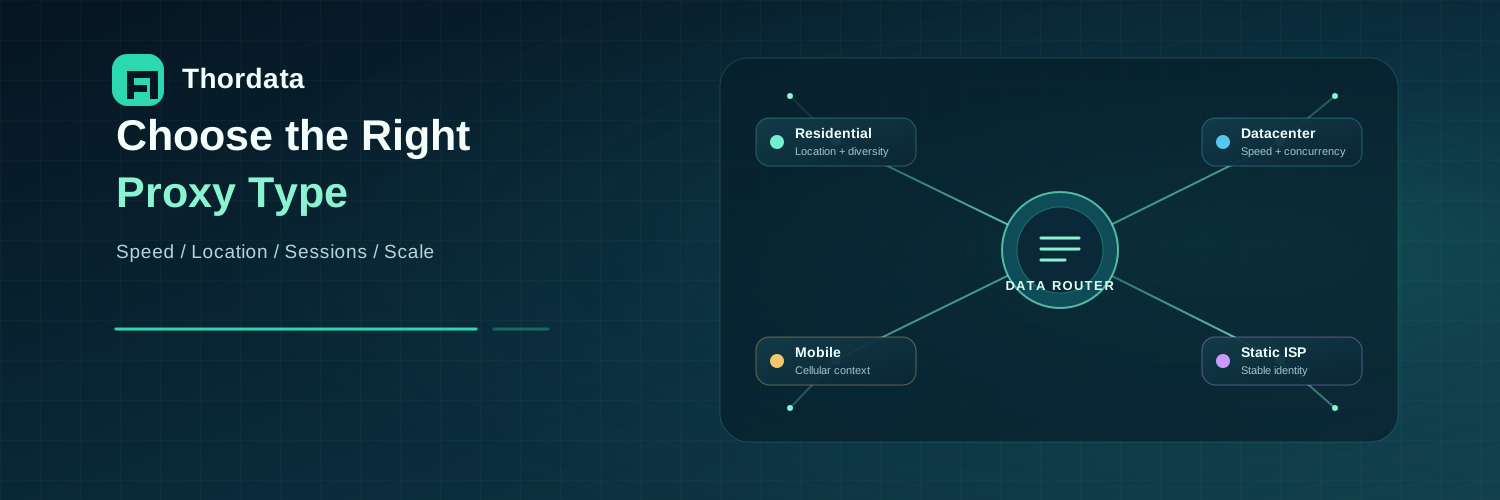
Residential vs. Datacenter Proxies: How to Choose the Right Proxy Type for Web Data Projects
Compare residential, datacente ...
flora
2026-09-09
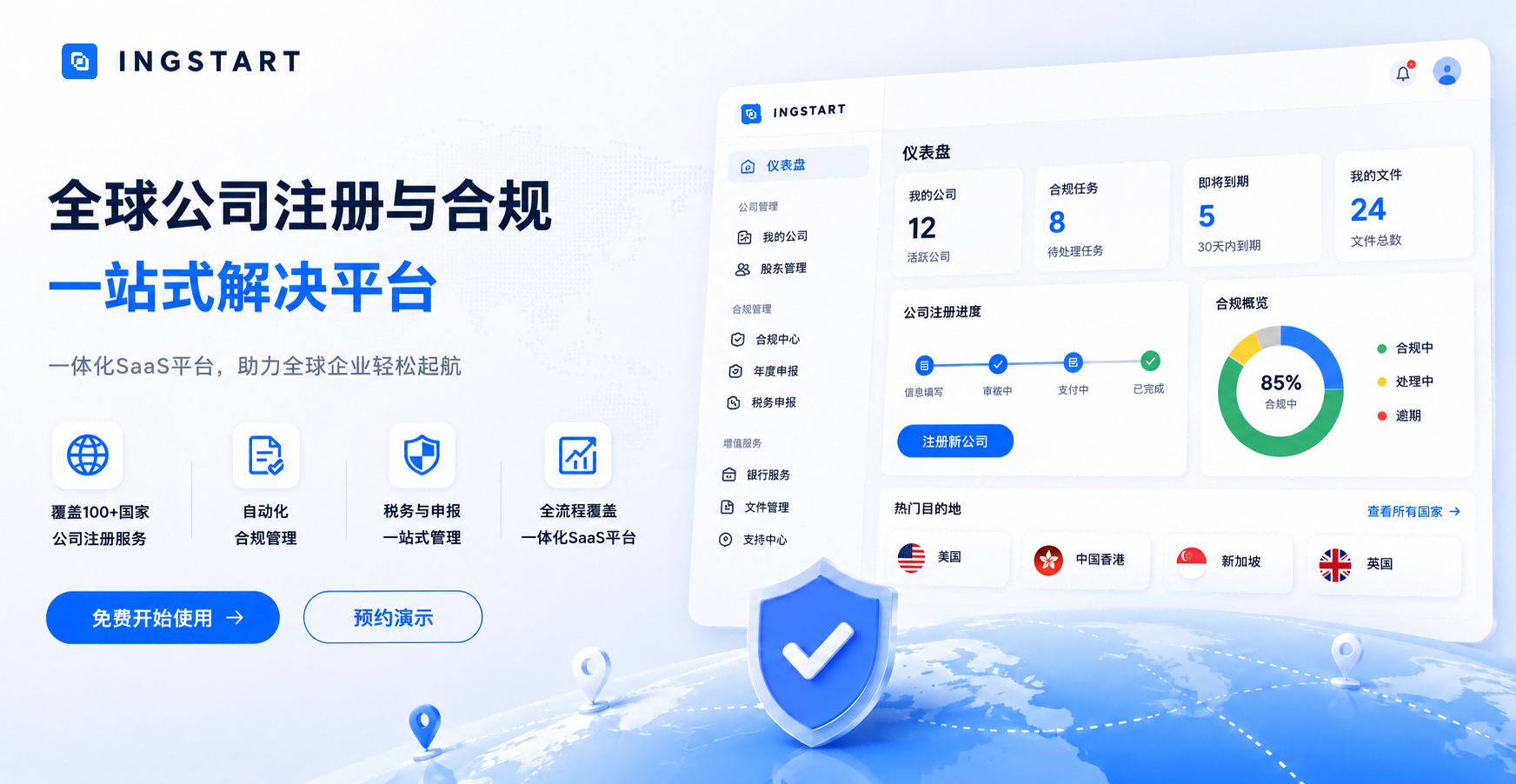
出海的隐性成本:你不需要更努力,你需要对的伙伴
本文梳理跨境企业在海外注册、开户和合规环节最常遇到的实际问题 ...
Xyla Huxley
2026-09-08

Residential Proxy vs Datacenter Proxy: Which One Should You Choose?
Understand the key differences ...
greta
2026-09-07

Best Residential Proxies in 2026: How to Choose the Right Provider
Learn how to compare residenti ...
greta
2026-09-07

Is Free Proxy Reliable? Shortcomings and Alternatives
Many users initially prefer free proxies due to cost co […]
Unknown
2026-09-07

簽下企業級代理合約之前:Oxylabs 與 Thordata 的總成本審視
企業級代理合約是靠信任買單、按用量定價的——而後者正是預算被 ...
Xyla Huxley
2026-09-07
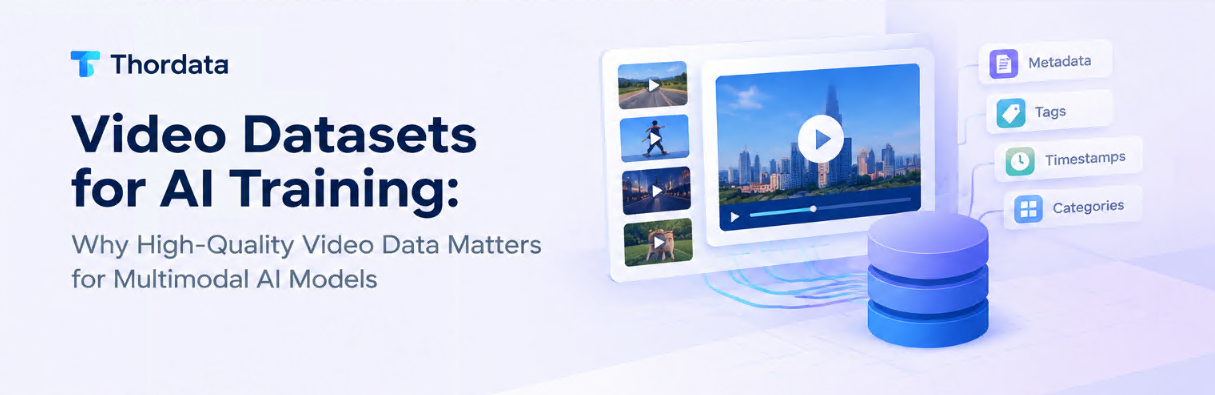
Video Datasets for AI Training: Why High-Quality Video Data Matters for Multimodal AI Models
Explore why video datasets are ...
flora
2026-09-07
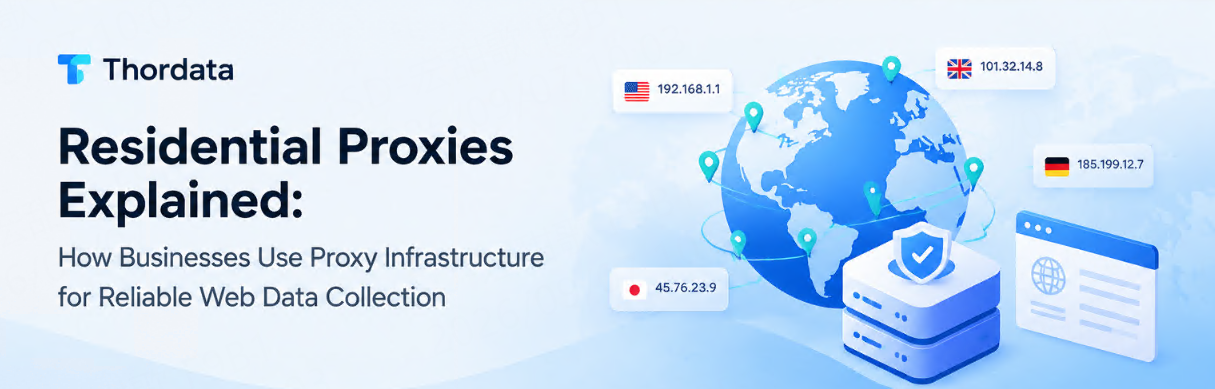
Residential Proxies Explained: How Businesses Use Proxy Infrastructure for Reliable Web Data Collection
Learn how residential proxies ...
flora
2026-09-07

住宅代理健檢報告:千萬級 IP 池為什麼還是被封(附 Thordata vs. Decodo 誠實比較)
IP 池規模是代理市場裡最常被引用、預測力卻最低的數字。真正 ...
Xyla Huxley
2026-09-07