


Web Scraper API
Fetch real-time data from 100+ websites,No development or maintenance required.
SCRAPING SOLUTIONS
Get accurate and in real-time results sourced from Google, Bing, and more.
With 120+ prebuilt and custom scrapers ready for any use case.
No blocks, no CAPTCHAs—unlock websites seamlessly at scale.
Execute scripts in stealth browsers with full rendering and automation
PROXY INFRASTRUCTURE
Over 100 million real residential IPs from genuine users across 190+ countries.
Reliable mobile data extraction, powered by real 4G/5G mobile IPs.
For time-sensitive tasks, utilize residential IPs with unlimited bandwidth.
Fast and cost-efficient IPs optimized for large-scale scraping.
SCRAPING SOLUTIONS
PROXY INFRASTRUCTURE
DATA FEEDS
Full details on all features, parameters, and integrations, with code samples in every major language.
LEARNING HUB
ALL LOCATIONS Proxy Locations
TOOLS
RESELLER
Get up to 50%
Contact sales:partner@thordata.com
Products $/GB
Fetch real-time data from 100+ websites,No development or maintenance required.
Get real-time results from search engines. Only pay for successful responses.
Execute scripts in stealth browsers with full rendering and automation.
Bid farewell to CAPTCHAs and anti-scraping, scrape public sites effortlessly.
Dataset Marketplace Pre-collected data from 100+ domains.
Over 100 million real residential IPs from genuine users across 190+ countries.
Reliable mobile data extraction, powered by real 4G/5G mobile IPs.
For time-sensitive tasks, utilize residential IPs with unlimited bandwidth.
Fast and cost-efficient IPs optimized for large-scale scraping.

Data for AI $/GB
Pricing $0/GB
Docs $/GB
Full details on all features, parameters, and integrations, with code samples in every major language.
Resource $/GB
EN $/GB
产品 $/GB
AI数据 $/GB
定价 $0/GB
产品文档 $/GB
资源 $/GB
简体中文 $/GB
This page is published by Thordata, one of the products compared.
A SERP API choice depends on whether you need a response package, a request-based free tier, or an API that also handles competitor-site scraping. Thordata’s SERP API supports localized search results in JSON or HTML, while Bright Data offers a request-based free tier and ScraperAPI also supports competitor-site collection. This comparison is for teams building rank trackers, search reports, or ad-monitoring workflows in 2026. It sets out what to test and how to compare coverage, integration, and billing units without treating a credit, response, and request as interchangeable.
A SERP API choice turns on search coverage, the results you need, and how often you collect them. Compare Thordata, Bright Data, ScraperAPI, and Oxylabs by the work each API handles: retrieving search pages, rendering them, and returning data your reporting workflow can use.
| Option | Use case | Documented capability |
|---|---|---|
| Thordata | Retrieving search results for an existing application | SERP API integration returns JSON or HTML and provides code examples in multiple languages. |
| Bright Data | Collecting results where page rendering needs handling | Bright Data SERP API provides JavaScript rendering, CAPTCHA solving, retries, IP rotation, and JSON or HTML output. |
| ScraperAPI | Collecting organic and paid results on a schedule | ScraperAPI supports custom collection intervals and handles parsing, CAPTCHAs, and IP blocking. |
| Oxylabs | Feeding parsed search results into reports | Oxylabs SERP Scraper API returns organic and paid results as HTML or structured JSON. |
Competitor capabilities shown are as of October 2026. These are distinct workflows, not an overall ranking.
A SERP API test should send the same queries for the same locations, result types, and collection windows to every provider. The right choice for a workflow depends on whether its responses contain the results and fields that workflow actually uses. Compare matched requests, not headline performance claims.
Fix the request set. Use identical search terms, device settings, target countries or cities, organic or paid result types, and collection windows. Keep the raw response and request parameters so a missing field can be traced to a specific query.
Measure usable output. Record successful responses and latency. For each response, count the organic results returned and mark whether required fields and relevant SERP features appear. Treat an empty or incomplete response separately from a transport error.
Check AI answers only if needed. If the workflow extracts AI-generated answers, record whether the response exposes the answer and any required citations. Otherwise, leave that check out. Thordata’s SERP API output options include JSON and HTML; use the format the downstream parser will consume.
Choose according to the search engines, location controls, output format, and integration path your application needs. SERP APIs differ on each point: Thordata documents Google and Bing results, while the other options emphasize different collection or delivery controls. JSON and HTML support do not imply identical result schemas, so map the fields your application consumes before changing APIs.
| Capability, as of October 2026 | Thordata | Bright Data | ScraperAPI | Oxylabs |
|---|---|---|---|---|
| Search and output | Real-time Google, Bing, and other search results; JSON or HTML | Real-time results from major search engines; JSON or HTML | Organic and paid results | Search results; HTML or structured JSON |
| Location control | Country or city | Localized results | Country, region, or city | Country, state, city, or coordinates; language parameters |
| Collection and integration | API with multi-language code examples | JavaScript rendering, CAPTCHA solving, retries, IP rotation, and third-party crawler integration | Parsing and configurable collection intervals; proxy pool for in-house scrapers or its Scraping API | Scheduled jobs deliver to Amazon S3, GCS, Alibaba Cloud OSS, or S3-compatible storage |
Oxylabs’ coordinate targeting suits location-specific queries; its scheduled cloud delivery suits pipelines that ingest files rather than call an API for each result.
Compare costs based on what the workload consumes, not just the lowest price printed beside a plan. For a SERP API comparison, keep each provider’s billing unit and entry terms separate: a request, a response and an API credit are not automatically equivalent. Price the same set of searches under each plan before comparing totals.
| Provider | Billing unit | Entry terms, as of October 2026 |
|---|---|---|
| Thordata | Responses; one credit per response | SERP API: 7-day trial with 500 responses at $0/month; 15,000 responses for $18/month |
| Bright Data | API requests | 5,000 free requests; pay as you go at $1.50 per 1,000 requests; 380,000 requests for $499/month, then $1.30 per 1,000 |
| ScraperAPI | API credits per month | 7-day trial with 5,000 credits; 100,000 credits for $49/month |
Bright Data counts each executed API call as a request; collecting an asynchronous response does not add another request. ScraperAPI sells credits, so its 100,000-credit plan cannot be priced as 100,000 searches without a consumption rule.
Calculate effective cost using the expected search volume, then include retries and failed calls. Check failure charges directly before purchasing.
Choose a SERP API against a repeatable trial rather than a headline price or uptime figure. Use the same queries, locations, required fields, and output format for each provider. Record failed requests as well as successful ones.
Run identical queries from every target country or city. Compare whether the returned results match the locations your reporting covers.
Check required organic, paid, and other SERP fields in the returned output. Record absent fields rather than counting a response as complete.
Repeat failed requests and record retry behavior, the number of usable responses, and any charges. Time the work needed to connect the API to your existing pipeline.
| Trial terms, as of October 2026 | Thordata | Bright Data | ScraperAPI |
|---|---|---|---|
| Offer | 7 days; 500 responses at $0/month | 5,000 requests and 5,000 records per month; no credit card | 7 days; 5,000 API credits |
Choose the API that meets your measured field, location, retry, and integration requirements; Thordata’s SERP API product details describe its offer.
If you need localized Google or Bing results in JSON or HTML, choose Thordata’s SERP API, because it supports country- and city-level targeting and returns either format. If your search workflow needs JavaScript rendering and automatic retries, choose Bright Data’s SERP API, because both are included alongside CAPTCHA handling and IP rotation.
If you need Google results without configuring JavaScript rendering, choose ScraperAPI, because its SERP API handles that step. If you need results from Google Videos rather than general search pages, choose Thordata’s Google Videos API, because it returns video-specific fields such as key moments, channel and thumbnail.
Thordata’s general SERP API suits buyers tracking keyword ranks or local search results who want structured output. Do not use it to collect YouTube transcripts or video files; those require a video-data product rather than search-result retrieval.
DataForSEO pricing cannot be established from the figures available for this comparison. For a budget decision, compare its quote against a defined workload—such as the same search queries, locations, devices, and output format—rather than against another API’s headline price per request.
Which SERP API fits depends on the number of searches, the locations and devices required, and whether the bill is based on requests, responses, or credits. Thordata suits a buyer who wants JSON or HTML results with country- or city-level targeting and a monthly response package; Bright Data offers pay-as-you-go requests, while ScraperAPI offers a monthly API-credit plan. Credits and responses should not be treated as interchangeable without measuring the credits consumed by the same workload.
The published figures support a direct comparison of Thordata, Bright Data, and ScraperAPI, but not a price comparison with SerpApi, DataForSEO, ScrapingBee, Zenserp, or Scale SERP. Prices are as of October 2026.
| Criterion | Thordata | Bright Data | ScraperAPI |
|---|---|---|---|
| Billing unit | Response; packages pair one credit with one response | API request | API credit |
| Free offer | 500 responses over a 7-day trial, $0/month | 5,000 requests and 5,000 records per month, no credit card | 5,000 API credits over a 7-day trial |
| Smallest stated paid option | 15,000 responses for $18/month ($1.20 per 1,000) | Pay as you go at $1.50 per 1,000 requests | 100,000 API credits for $49/month |
| Other stated paid options | 50,000 for $55; 150,000 for $135; 500,000 for $400; 1,000,000 for $700 | 380,000 requests for $499/month; additional requests at $1.30 per 1,000 | Not stated |
| Geographic targeting | Country or city | City-level targeting | Country, region, or city |
Thordata’s SERP API returns JSON or HTML and lists an average response time under one second. Bright Data’s pricing counts each executed API call as a request; ScraperAPI’s plan is denominated in credits, so its $49 price alone does not establish a per-search cost.
ScraperAPI lists 100,000 API credits for $49 per month as of October 2026; the available figures do not establish prices for SerpApi, DataForSEO, Serper, or Zenserp. A meaningful comparison would calculate the cost of the same set of successful searches, including any location, device, or rendering settings that change credit consumption.
Tavily and Brave Search API belong in the evaluation only if their returned fields meet the reporting task. For keyword-rank tracking or paid-ad monitoring, require a sample that exposes the needed result positions, ad fields, location, and device view; a search answer or link list is not automatically a substitute for a SERP record. No pricing comparison for Tavily, Brave Search API, SerpApi, DataForSEO, or Serper is supported by the figures here.
Bright Data lists 5,000 free requests and records per month, pay-as-you-go pricing of $1.50 per 1,000 requests, and a $499 monthly Scale plan that includes 380,000 requests as of October 2026. Requests beyond the Scale allowance cost $1.30 per 1,000. Bright Data counts the API call that sends an asynchronous request, not the later call that collects its response.
No supported price figure is available here for SerpApi, DataForSEO, Scale SERP, or ScrapingBee. Do not rank them against a response-priced or request-priced plan on an assumed per-search rate. The deciding calculation is total charge for the same query set and required result fields.
Thordata’s 500-response offer lasts seven days; Bright Data’s free tier includes 5,000 requests and 5,000 records per month as of October 2026. A recurring job needs enough allowance for every keyword, location, device, and scheduled run. For example, changing the device or city creates another search to budget for, even when the keyword stays the same.
Choose the API that returns the required fields for the target locations and devices at the lowest measured cost per usable result. Run the same query set through each candidate, then count usable JSON or HTML results, missing organic or paid fields, response times, and billed units. A lower price per 1,000 units loses its advantage if the job consumes more units or omits fields the report requires.
 Looking for
Top-Tier Residential Proxies?您在寻找顶级高质量的住宅代理吗?

Decodo Mobile Proxy Review: Pricing and Trade-offs
Decodo lists a 10M+ mobile proxy pool across 160+ locations and mobile pricing from $2.25/GB. The review advises buyers to check current terms and test location coverage, session continuity, traffic use and performance on their own workloads.
Unknown
2026-11-02
Video Download API Pricing: What to Compare Before You Buy
Video download API pricing depends on the deliverable and billing unit. The text compares downloaded files, video datasets, and search-result data, and explains how to estimate costs using file volume, minimum purchases, and applicable taxes.
Unknown
2026-11-02
How to Find and Evaluate a TikTok Dataset for Research
Compare official research access, archived downloads and custom collection by the fields, coverage and refresh schedule a study needs. Inspect documentation, test samples and disclose collection limits and exclusions.
Unknown
2026-11-02
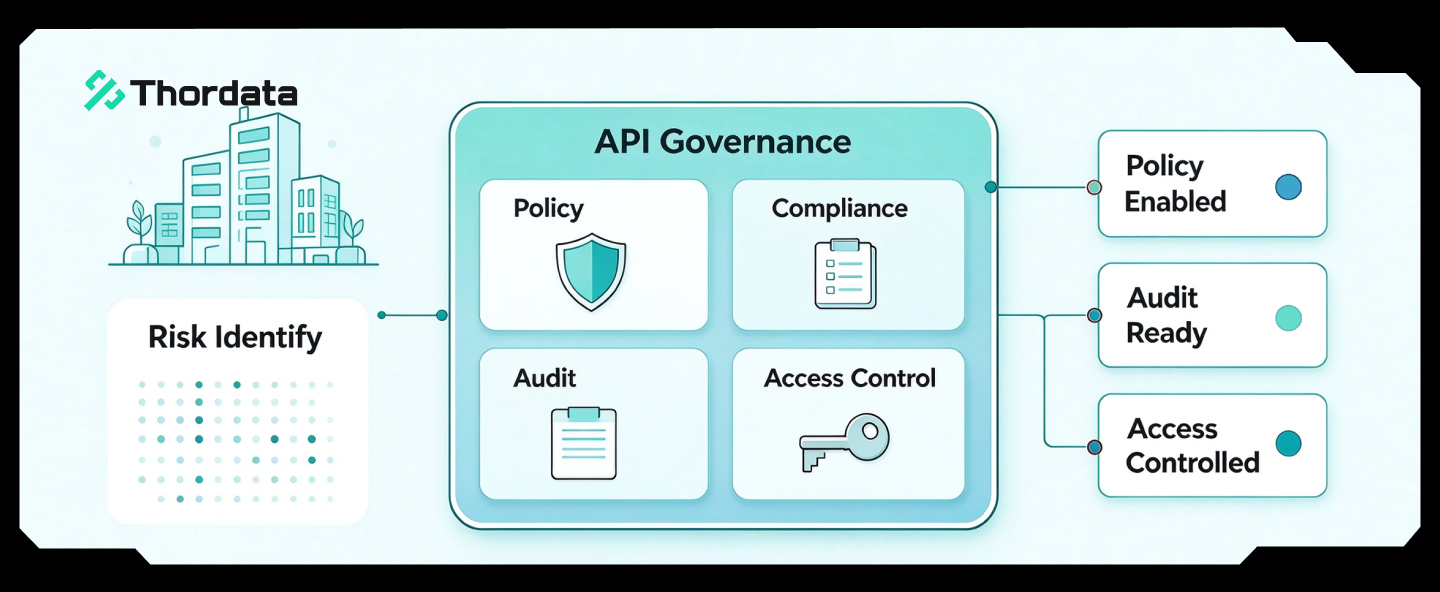
SERP API Comparison: Thordata, Bright Data, and ScraperAPI
A SERP API comparison depends ...
Xyla Huxley
2026-11-02

How Much Does a Static Residential Proxy Cost?
A static residential proxy can ...
Xyla Huxley
2026-11-02
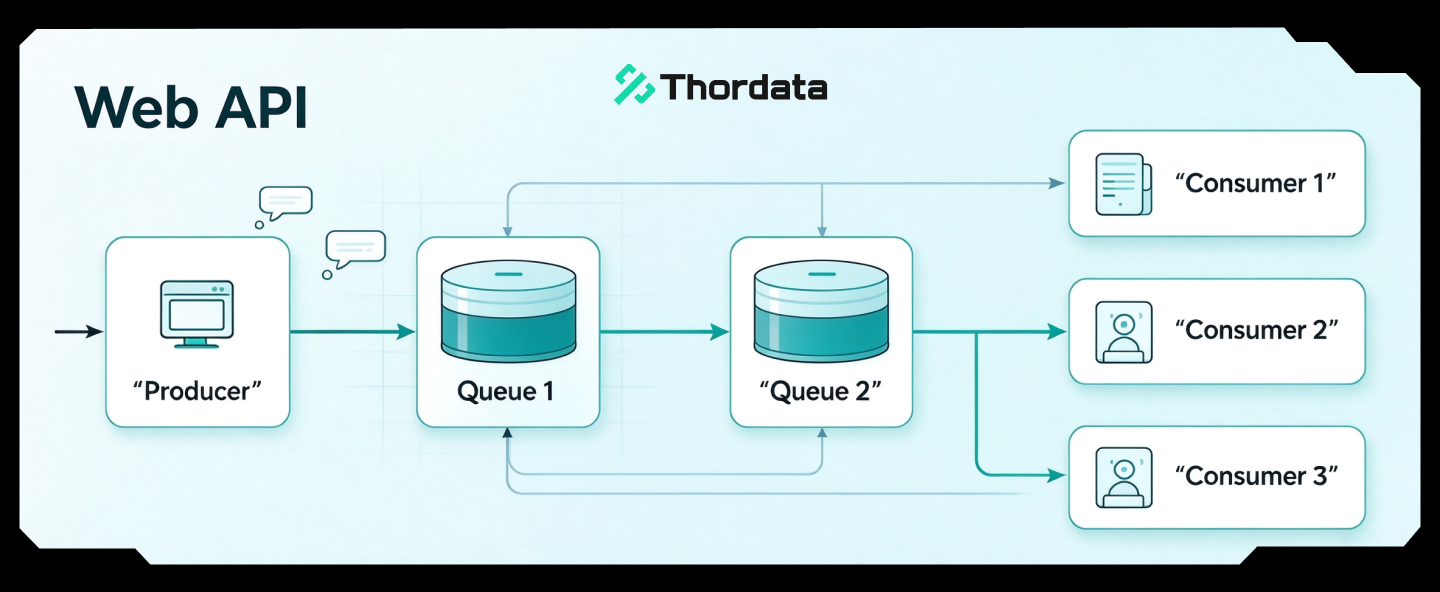
How to Choose a Video Download API in 2026
For a video download API in 20 ...
Xyla Huxley
2026-11-01
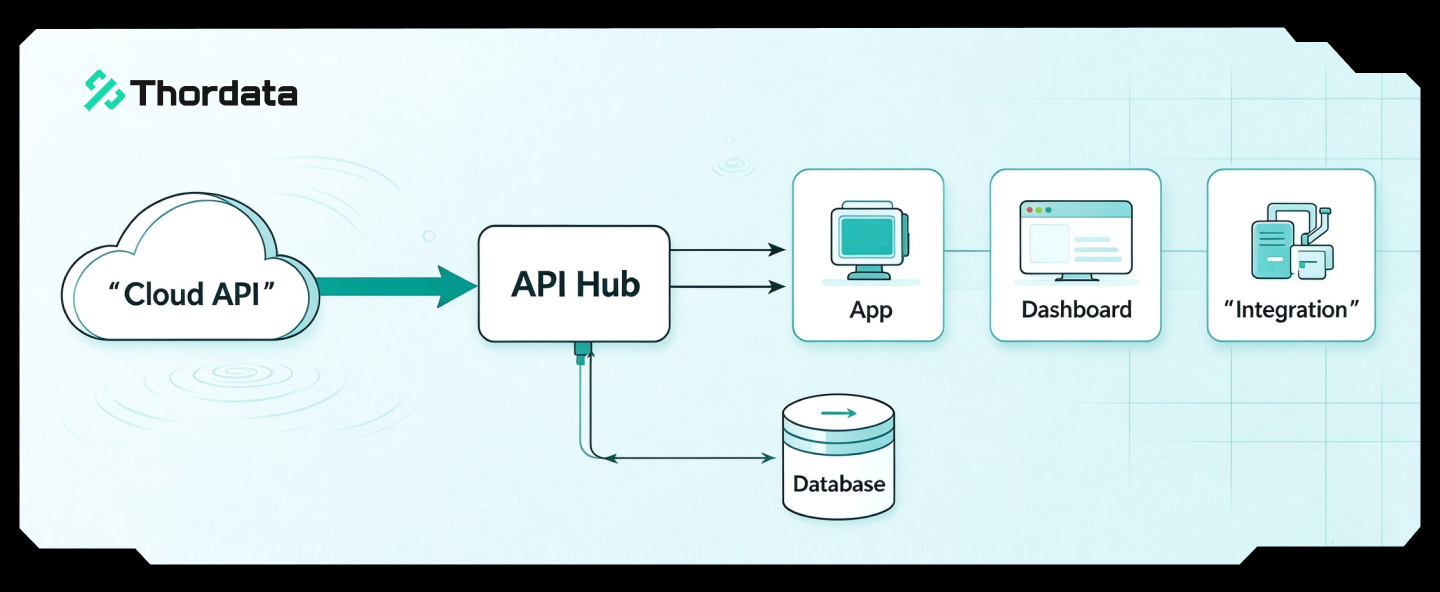
SOCKS5 Proxy Comparison: How to Evaluate Providers
A socks5 proxy comparison star ...
Xyla Huxley
2026-11-01
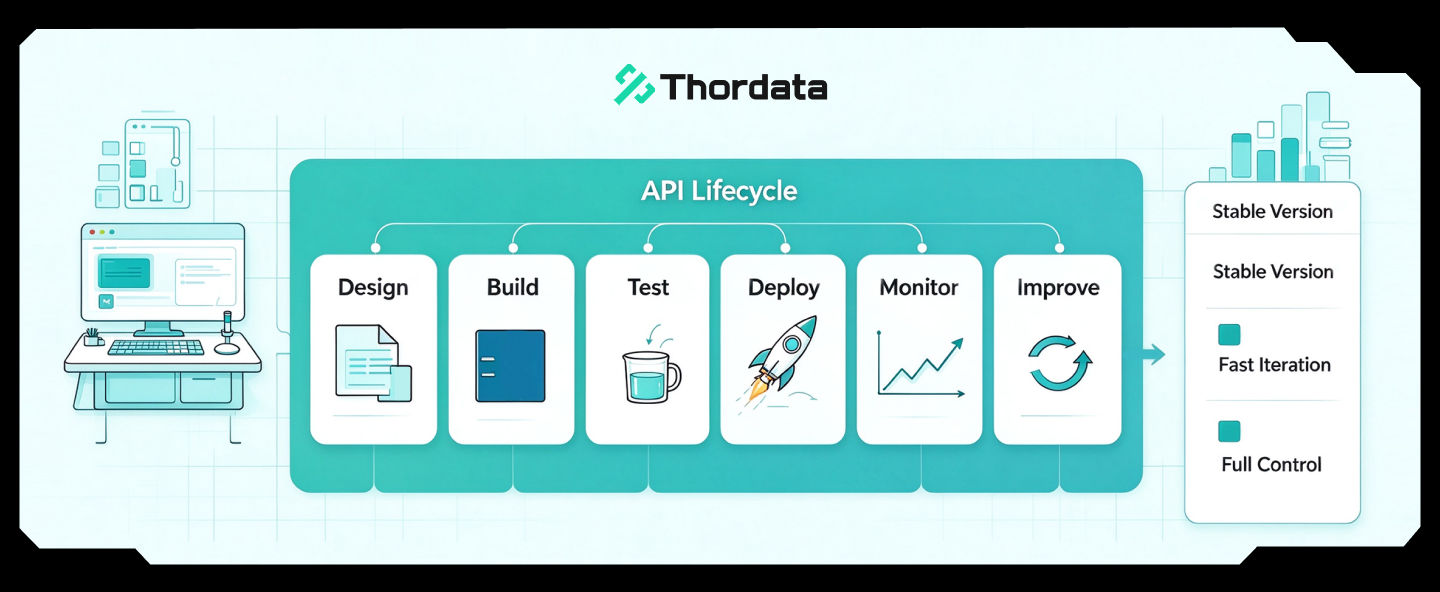
TikTok Scraping API: How to Compare Data Access Options
A TikTok scraping API collects ...
Xyla Huxley
2026-11-01
How to Choose an Audio-Video Dataset for an AI Project
An audio-video dataset for AI ...
Xyla Huxley
2026-11-01