What a Scraping API Should Cost: The Anatomy of Per-Request Pricing
“Web scraping API pricing” searches are buyer-stage searches — someone is about to spend money and wants to know what fair looks like. The honest answer has almost nothing to do with sticker rates and everything to do with pricing *shape*: what the unit is, what a failure costs, and how the model behaves at 2× your current volume. This is the anatomy — the three shapes on the market, the true-cost formula, and the arithmetic that catches the “cheapest” option lying.
The Three Shapes on the Market
Every scraping API bills in one of three currencies, and the choice of currency predicts your costs better than any rate card:
Shape 1: Per delivered result. You pay for records received — parsing, retries, and CAPTCHA solving are the vendor’s overhead, priced into the unit. Thordata’s Web Scraper API is the type case: about $0.50–$1.00 per 1,000 delivered results by volume across 120+ maintained targets, failed attempts $0.
Shape 2: Per request or per GB. You pay for traffic made, regardless of outcome. Residential-proxy collection is the type case — Thordata’s slider runs $2.00/GB at 1 GB down to $0.65/GB at volume — and the shape’s defining property is that failures cost real money: a blocked request still consumed bandwidth.
Shape 3: Subscription. You pay a monthly tier for an allowance. Common in the market (various vendors’ $19–$99/mo API tiers per third-party listings); predictable at steady volume, stepped at growth.
The shapes aren’t competitors — mature stacks run all three, routed by target difficulty. The expensive mistake is running one shape where another belongs.
The True-Cost Formula
Sticker rates hide three terms. The formula that catches them:
true cost per usable record =
    unit price
    × (1 / delivery rate)          # blocked/failed attempts, if billed
    × (1 / parse success rate)     # records that arrive but don't parse
    + your engineering per record  # maintenance, parsers, glue
The two multiplier terms are where “cheapest scraping API” claims go to die. A $0.30-per-request API with a 60% delivery rate costs more per usable record than a $0.50-per-result API at 100% billing-on-delivery — the first is paying for attempts, the second only for outcomes. And the engineering term is the quiet giant: homegrown pipelines price it at zero and pay it in sprints.
The Arithmetic That Catches Liars
Run any “cheap” claim through three checks:
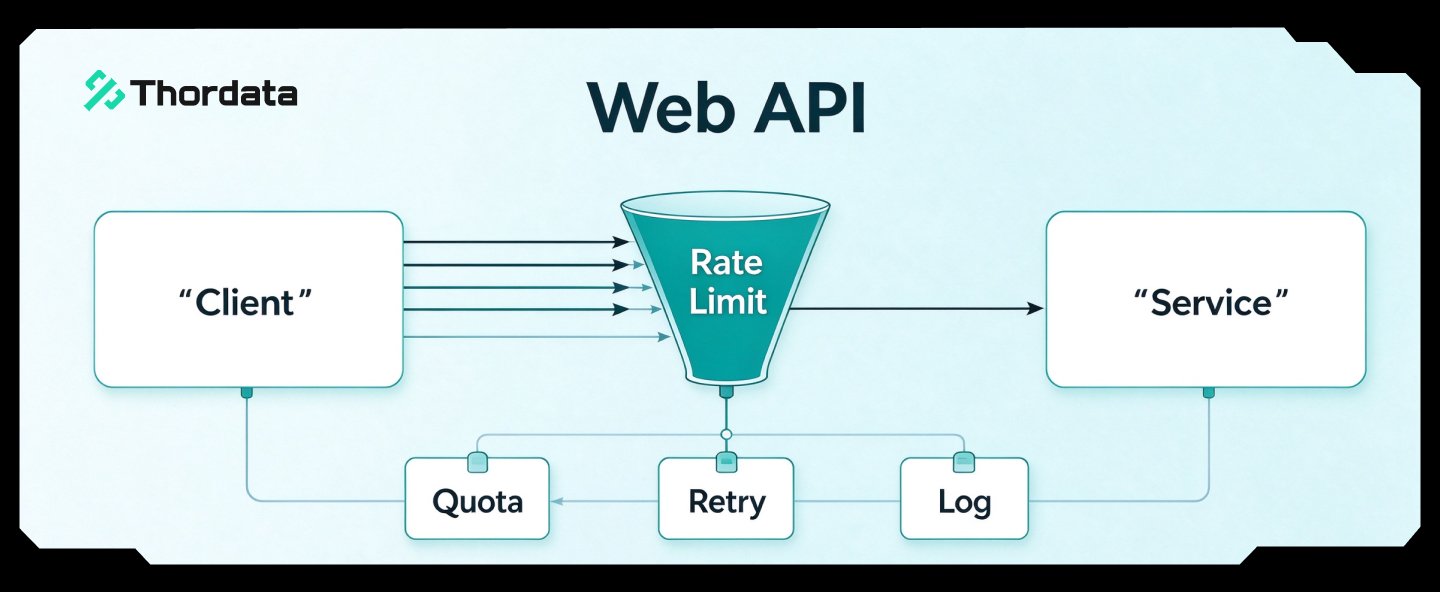
- The failure test: what does a blocked or failed request cost? Per-result billing answers $0; per-request/per-GB answers “real money”; subscriptions answer “an allowance unit.” Vendors who bill on delivery can afford aggressive retries; vendors who bill on attempts can’t — the retry policy tells you which bill you’re on.
- The 2× test: double your volume in the pricing model. Per-result scales linearly; subscriptions hit tiers; per-GB slides down a curve. If the 2× number changes your vendor preference, you’ve learned something about your roadmap’s actual cost curve.
- The freshness test: does “delivered” mean current? A cheap result with a stale cache behind it (yesterday’s price, served today) is a discount on the wrong product. Timestamped records turn freshness into an auditable field instead of a trust exercise.
What Each Thordata Layer Costs, Published
For a concrete rate card in each shape, Thordata’s published pricing covers the full routing table:
| Layer | Shape | Published rate |
|---|---|---|
| Web Scraper API (120+ targets) | Per delivered result | ~$0.50–$1.00 per 1,000 results |
| SERP API (structured responses) | Per response | ~$0.70–$1.20 per 1,000 by volume |
| Web Unlocker (hostile targets) | Per response | ~$1.00–$1.30 per 1,000 |
| Residential collection (long tail) | Per GB | $2.00/GB → $0.65/GB by volume |
| Scraping Browser (automation flows) | Per GB | $2.50/GB |
One account, every shape, no negotiated tiers required to know the arithmetic in advance. That transparency is itself a pricing feature: teams budget before the sales call instead of after the first invoice.
The AI-Side Corollary
Search-side workloads have their own anatomy, and the shape lesson applies harder there: SERPs are the heaviest, best-defended pages on the web, so per-GB collection of them is the worst shape in the market — the right currency is per structured response. Thordata’s SERP API prices it that way, and its MCP server extends the same economics to agents: live search, request history, and usage statistics as agent tools, 500 free calls for new accounts, drawing on the existing response balance with no separate subscription. Agent workloads are the spikiest volume profile in the industry — bursty research jobs, retry loops — which makes failure-cheap, linear pricing the shape that survives them.
FAQ
Is the cheapest option ever the right one?
When shape matches: a genuinely free tier for prototyping, a small subscription for a stable tiny workload. The expensive version of “cheap” is always the same — a low unit rate multiplied by a failure rate nobody quoted.
Why do vendors price per attempt at all?
Because attempts are what their infrastructure meters, and because steady-volume buyers prefer predictable envelopes. The shape exists legitimately; the trap is buying it for spiky or failure-prone workloads where the multipliers bite.
How do I compare a subscription against per-result honestly?
Convert both to cost-per-usable-record at your real volume (formula above), then run both again at 2×. The subscription wins flat; per-result wins spiky. Neither number is wrong — the mistake is comparing sticker prices instead of converted ones.
What about the ‘free’ tier claims everywhere?
Trial credits and free tiers are evaluation tools, not pricing — their job is letting you run the failure test and the 2× test on real data before money moves. Thordata’s trial credits and the MCP tier’s 500 free calls are exactly that: a free run of the anatomy checks above. Use the agent-side trial the same way — one research task, watch the citations appear, check the usage statistics tool’s cost report — and the pricing shape that fits your stack will identify itself.
The one-line anatomy?
Price is a shape before it’s a number — know your unit, your failure cost, and your 2× curve, and the “cheapest scraping API” question answers itself with arithmetic instead of slogans. Start the arithmetic where it’s free: the published rate card and trial credits on one side, your volume curve on the other.
 Looking for
Top-Tier Residential Proxies?