Best Robotics Training Data Providers Earn the Contract in Writing: The Documents That Decide a Data Purchase
A data purchase in robotics is decided before anyone sees a validation curve. It is decided by what a vendor can put in writing: which task families the collection covers, where the footage came from, what was thrown away, which fields ship with each record, how the files reach your storage, and what happens in month four when the distribution has drifted.
I have watched teams spend weeks comparing catalog sizes and then discover, at integration time, that nobody had written down whether the corpus contained action labels. That failure is avoidable with paperwork. Here are the eight documents a serious supplier of real-world video data for robot training should be able to produce, what each one proves, and the one document almost nobody volunteers.
The scope statement names the task before it names the price
The first artifact is a restatement of your requirements, not a brochure. Scenes, task families, volumes, target platforms, languages, and the training stage the data is meant to feed. It matters for an obvious reason: the same footage is a different product depending on which layer of a VLA stack it serves. Video for a perceptual encoder wants scene and object breadth. Video for a latent-action or world-model objective wants temporal continuity and camera motion you can learn from. Video for a fine-tuning set wants task density, and that is a different collection brief entirely. The debate over the best VLA datasets starts here, because which datasets count as best depends on the layer you are feeding.
A provider that will not restate scope is a provider who is about to sell you a file that matches nobody’s architecture. Among embodied AI data providers, the ones worth a meeting open with this document, because it commits them to something checkable. Thordata’s dataset line works this way: you send scenes, task families, volumes, and target platforms, and the reply is a scoped quote rather than a price list, with custom-build responses promised within 1 to 3 business days.
The source record answers where every hour came from
This is the document that separates a collection operation from a download folder. It should say, per batch: which platforms or which filming setup, which countries or environments, under what basis of access, and who did the recording.
Three legitimate answers exist, and a good source record names which one you are buying. Platform-sourced video, where the supplier’s infrastructure reaches the content: Thordata’s multi-platform video datasets line publishes coverage of 20+ billion YouTube videos against 5+ billion seed URLs, a catalog of 6 billion original videos from 700 million unique channels, and 17+ billion indexed URLs. Purpose-collected first-person footage, where humans were recruited and filmed to a spec: the egocentric line is documented at 90,000+ hours across home, office, and factory scenes. And aggregation of public research corpora, which nobody should charge you for and which arrive with their own license strings attached.
Ask for the source record because it is also your licensing evidence. Thordata’s own FAQ tells buyers to confirm usage rights and consult counsel for their specific use case, and the company maintains a public catalog of licensed video datasets on GitHub that separates “reachable” from “trainable.” Compliance claims on a homepage are vendor statements; the source record is what your legal team can act on. Among robotics dataset vendors, the phrase “ready-made” hides all three sources above, which is why the record matters more than the catalog page.
The selection report is where you learn the rejection rate
Collection is the cheap part of this business; selection is the product, and the selection report is the proof. It should record what the filters removed and why: resolution floors and frame-rate thresholds, camera-motion and scene-cut heuristics that separate one continuous demonstration from a jump-cut montage, relevance matching against titles and transcripts, near-duplicate removal, and the human spot check that catches what the automated pass waved through.
Two numbers are worth demanding. The first is rejection rate. A supplier who rejects nothing is not filtering, and you will pay twice: once for the corpus and once for the cleaning project. The second is verification coverage, because the industry’s own experiments show quality is not free. AgiBot’s published ablation found that 528 human-verified trajectories outperformed 482 unverified ones by 0.18 on task completion score, and the EPIC-KITCHENS team measured models degrading on footage recorded two years after their training set, while adding more of the same kind of data saturated. Diversity and verification, not volume, are the constraints.
The field dictionary turns footage into something you can query
A field dictionary is a boring document that decides whether your next three months are boring or interesting. It lists every field in the delivered record with its definition, type, and completeness rate, and it comes with coverage statistics: record counts, distribution across scenes or markets, and field completeness.
For video corpora the minimum useful set is title, description, channel or creator, upload time, duration, view count, tags, plus engagement signals and aligned transcripts. Thordata’s structured outputs ship as JSON, CSV, or XLSX from the scraper side and JSON, CSV, Parquet, or NDJSON through the dataset platform, with transcripts in more than 100 languages, which is what makes non-English source pools usable rather than decorative. When the scope grows past video, the multimodal data solution covers audio, image, text, and embodied-intelligence lines under the same documentation habits.
Read the dictionary for what is absent. If no field carries action labels, camera pose, or force and tactile channels, that is not a paperwork gap; it is the shape of the product.
The delivery manifest is the contract with your storage
Delivery is where most integration surprises live, so get it in writing before the first invoice. The manifest should name formats, batch mechanics, targets, and failure handling.
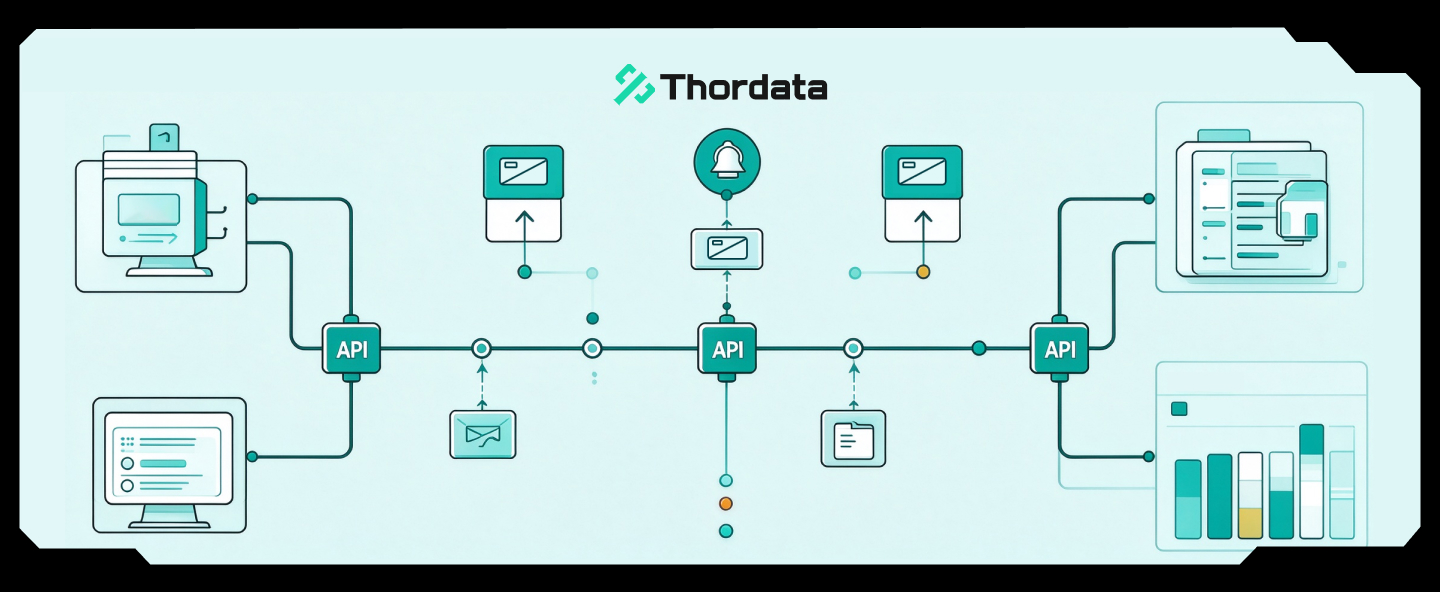
Concretely: media at a resolution you specify rather than whatever the crawler grabbed, video in .mkv or .mp4 up to 2K, audio in .m4a or .mp3, transcripts as .json. Batches that stay sane at corpus scale, with Thordata’s video builder handling up to 10,000 URLs per job. Push into your own bucket, with the documented targets covering Amazon S3, Azure Blob, Google Cloud Storage, SFTP, a webhook, or a direct API pull, and keys that stay yours. And billing mechanics worth reading closely: the scraper products bill per result from $0.50 per 1,000 and the SERP API from $0.70 to $1.20 per 1,000 successful responses, with failed requests not charged, while media-heavy video work is quoted per scope.
The refresh terms decide whether the corpus stays alive
A dataset with no cadence is a photograph of a distribution. Distributions move: packaging changes, clutter changes, and the failure cases from March are not the ones in September.
So the sixth document is the refresh agreement. Does the supplier support recurring delivery on a schedule, incremental pushes into the same bucket, and a stable schema across pulls? Thordata’s platform documents scheduled collection and recurring delivery, with hourly and streaming options on custom builds. The practical version of this is automation rather than tickets: the n8n integration puts collection and alerting into workflows your team already runs, and the MCP endpoint lets an agent re-run the discovery question itself, which is how you notice a source has gone quiet before your next training run does. Refresh terms are also where robotics data API providers part company with sellers of static exports: one owes you a schema that stays stable across pulls, the other owes you a checksum.
Pin the schema in writing. A refresh that renames a field should fail loudly in your pipeline, not quietly lower a success rate three weeks later.
The sample pack and the acceptance protocol
Nothing above substitutes for holding the actual records. Sample-first evaluation is the norm in this market, and Thordata offers free samples before payment on ready-made datasets, with video-dataset quotes returned within one business day. Trials at the tooling layer cost nothing to run: 2,000 free results on the Web Scraper API, 500 responses on SERP, 500 calls on the MCP server, none requiring a card.
Judge a sample pack the way you would judge a pull request. Load it with the loader you will actually use, not a notebook. Diff every field against the dictionary, including frame rate and action dimensions where they exist. Pull the license statement for the specific sources inside your sample. Confirm camera perspective and annotation depth in writing, which is the exact instruction Thordata’s own documentation gives for its Ego line. And run one recurring delivery end to end into a scratch bucket before signing anything.
The eighth document nobody volunteers
Every provider will hand you the first seven. The one that decides whether you should trust them is a boundary statement: what their data cannot do.
This is where the comparison with teleoperation and simulation stops being marketing. Web-sourced and purpose-collected video carries no ground-truth action labels, no synchronized force or tactile streams, and rarely any camera calibration. Thordata’s documentation says this about its own egocentric datasets plainly: they are not pre-labeled with action segmentation and do not suit tasks requiring synchronized sensor physics. That is not an admission of weakness, it is the correct description of the lane, and it is the reason real-world video data for robot training works as a pretraining layer rather than a replacement for demonstrations.
Put the three sources side by side and each owns a different job. Teleoperated corpora carry exact trajectories at operator-bound cost; DROID’s published record is 76,000 trajectories and roughly 350 hours gathered by 50 collectors over 12 months, which tells you what that truth costs. Simulation carries perfect labels and cheap resets, and AgiBot’s synthetic platform spans 5 scene categories, 9 material classes, 12 atomic skills, and 180 object categories, but its trajectories are a prior rather than a proof. Owned video carries breadth and price per record measured in cents, and no action truth. The teams that ship are the ones whose vendor told them this in writing before the contract, not after the first bad evaluation. Which is why the honest version of a search for alternatives to teleoperation data ends in pretraining volume, not in demonstrations.
Running the whole review in two weeks
Sequence the eight documents as a schedule and the evaluation stops being a mystery. Days one and two: send scope, read the restatement. Days three and five: source record and selection report, with rejection rate and verification coverage in writing. Days six and eight: field dictionary, coverage statistics, delivery manifest. Day nine: refresh terms and schema pinning. Days ten to twelve: sample pack through your own loader, license statements per source, one recurring delivery into a scratch bucket. Day fourteen: decide.
Ask the same eight questions of three suppliers and the ranking answers itself, which is the practical route through the question everyone types into a search box about the best robotics training data providers. The answer is not a name; it is a stack of documents, and the vendor who produces them fastest usually has the least to hide. If you want to see how much paper a supplier really has, start the scope conversation through the official site and count what comes back within a business day.
The catalog is the least informative thing a provider sells. The paperwork is the product preview, and it is available before you pay. Start with the official site, ask for the eight documents, and let the missing ones make the decision for you.
 Looking for
Top-Tier Residential Proxies?