


Web Scraper API
Fetch real-time data from 100+ websites,No development or maintenance required.
SCRAPING SOLUTIONS
Get accurate and in real-time results sourced from Google, Bing, and more.
With 120+ prebuilt and custom scrapers ready for any use case.
No blocks, no CAPTCHAs—unlock websites seamlessly at scale.
Execute scripts in stealth browsers with full rendering and automation
PROXY INFRASTRUCTURE
Over 100 million real residential IPs from genuine users across 190+ countries.
Reliable mobile data extraction, powered by real 4G/5G mobile IPs.
For time-sensitive tasks, utilize residential IPs with unlimited bandwidth.
Fast and cost-efficient IPs optimized for large-scale scraping.
SCRAPING SOLUTIONS
PROXY INFRASTRUCTURE
DATA FEEDS
Full details on all features, parameters, and integrations, with code samples in every major language.
LEARNING HUB
ALL LOCATIONS Proxy Locations
TOOLS
RESELLER
Get up to 50%
Contact sales:partner@thordata.com
Products $/GB
Fetch real-time data from 100+ websites,No development or maintenance required.
Get real-time results from search engines. Only pay for successful responses.
Execute scripts in stealth browsers with full rendering and automation.
Bid farewell to CAPTCHAs and anti-scraping, scrape public sites effortlessly.
Dataset Marketplace Pre-collected data from 100+ domains.
Over 100 million real residential IPs from genuine users across 190+ countries.
Reliable mobile data extraction, powered by real 4G/5G mobile IPs.
For time-sensitive tasks, utilize residential IPs with unlimited bandwidth.
Fast and cost-efficient IPs optimized for large-scale scraping.

Data for AI $/GB
Pricing $0/GB
Docs $/GB
Full details on all features, parameters, and integrations, with code samples in every major language.
Resource $/GB
EN $/GB
产品 $/GB
AI数据 $/GB
定价 $0/GB
产品文档 $/GB
资源 $/GB
简体中文 $/GB
Blog
SERP APIsold-out-in-90-seconds-what-drop-monitoring-teams-get-wrong-before-the-countdown-starts

Limited drops — sneaker releases, console restocks, concert tickets — are the most hostile data environment in e-commerce. Anti-bot defenses peak exactly when data value peaks, prices and availability change by the second, and a monitoring gap of two minutes equals a missed drop for your users. The following is a composite interview with a data lead at a drop-monitoring platform (a blend of several real conversations, anonymized) about what actually breaks, and the collection architecture that survives drop day.
Q: Set the scene. What does your collection workload look like on a drop day?
A: Picture 300 product pages across 40 retailers. Most are quiet for days, then everything happens inside a 15-minute window: the page flips from “coming soon” to “add to cart,” sizes sell through in seconds, and the price you scraped two minutes ago is already the wrong price. Our users pay us for the first correct observation — second place is worthless. So our collection frequency during a window is every 3 to 5 seconds per page, which is a completely different engineering problem from the daily sweep we run the rest of the week.
Q: What breaks first?
A: The naive answer is “we get blocked.” The real answer is subtler, and it comes in layers:
| Failure layer | What it looks like | When it hits |
|---|---|---|
| Anti-bot spike | Retailers flip on aggressive bot detection minutes before the drop | T-minus 10 minutes |
| Queue systems | You land in a waiting room and scrape a queue position, not the product | T-minus 5 minutes |
| Session invalidation | Sessions that worked all week get force-expired | Drop window |
| Rate shaping | Requests succeed but return cached, stale pages | Drop window |
| Layout chaos | The buy box moves, A/B variants split traffic | Drop window |
The layer that kills teams is the fourth one — cached, stale pages. Your monitor returns HTTP 200, your parser finds a price, and it’s the price from before the drop. Everything looks healthy. The data is fiction. That’s why we measure observation freshness, not request success.
Q: How do you beat the cache layer?
A: You don’t beat it with volume — you beat it with credible sessions from the right geography. We run drop-window collection through residential IPs pinned to the retailer’s region, with sticky sessions long enough to carry a full queue → product → cart sequence. Thordata’s residential pool is what we standardized on: country/state/city/ASN targeting at no extra charge, sticky sessions up to 90 minutes, and a published volume slider — $2.00/GB at 1 GB stepping down to $0.65/GB at 5 TB, with $0.73 around the 1 TB mark where our steady-state volume sits. Drop-day spikes just move us along the slider; there’s no tier ceiling to hit mid-window.
Q: And for the big retail targets?
A: The major sneaker and electronics retail platforms are pre-built scraper territory — Thordata’s catalog covers 120+ targets with CAPTCHA solving and JS rendering included, billed per delivered result at roughly $0.50–$1.00 per 1,000 results. On drop day, per-result billing is a feature beyond price: a failed attempt costs nothing, so our retry strategy is aggressive without a finance conversation. The long tail of boutique retailer sites stays on raw residential traffic.
Q: What does the polling loop actually look like?
A: Boring on purpose:
import time, requests

# Region-pinned endpoint from the dashboard's endpoint generator
PROXY = {"http": "http://USER-geo-us-ny:PASS@res.thordata.com:18000"}

def watch_page(url, deadline, interval=4):
    while time.time() < deadline:
        r = requests.get(url, proxies=PROXY, timeout=15)
        state = parse_availability(r.text)      # coming_soon | live | sold_out
        if state.changed():
            alert_subscribers(url, state)        # the entire product, in one line
        time.sleep(interval)

# Window opens at 09:59:50 — start before, capture the flip itself
watch_page(PRODUCT_URL, deadline=drop_window_end())
The one design rule that matters: poll *before* the window opens. The most valuable observation we sell is the transition itself, and it’s gone in one request interval if you start late.
Q: What’s the part of the stack people underestimate?
A: Search. Two ways. First, drops leak into search results before they hit product pages — “where to buy,” restock rumors, and shopping placements move hours ahead, and monitoring that layer is how we predict which pages to watch harder. We run branded and product-term queries through Thordata’s SERP monitoring solution — structured results at about $0.70 per 1,000 responses at volume, geo-pinned per market — and it functions as our early-warning radar. Second, our own platform’s pages need to rank when a drop trends, and the continuous SERP data crawling feed tells us within a day whether we’re surfacing or getting buried.
Q: Final question — what would you tell a team building this from scratch today?
A: Three things. One: instrument observation freshness before anything else — if you can’t tell me the age of your newest successful observation per page, you don’t have a monitoring product. Two: don’t build peak capacity yourself; drop-day scale is spiky enough that managed infrastructure with a volume slider beats fixed capacity you pay for year-round. Three: watch the search layer — rank and shopping-placement monitoring is the cheapest predictive signal in this entire niche, and most teams don’t know it exists.
The interview’s pattern generalizes to any bursty, adversarial data problem — ticketing, flash sales, launch-day availability:
Free trial credits on the scraper and SERP APIs mean a two-week pilot on your ten hottest targets costs nothing but attention. Drop day comes whether your monitoring is ready or not; the difference is whether your users find out from you, or from a competitor two minutes sooner.
 Looking for
Top-Tier Residential Proxies?您在寻找顶级高质量的住宅代理吗?

Proxy Rotation Strategy for Web Scraping: When to Rotate IPs and When to Keep a Session
Build a practical proxy rotati ...
Jenny Avery
2026-09-24

How to Scrape Amazon Product Data for Price and Availability Monitoring
Learn how to build an Amazon p ...
Jenny Avery
2026-09-24
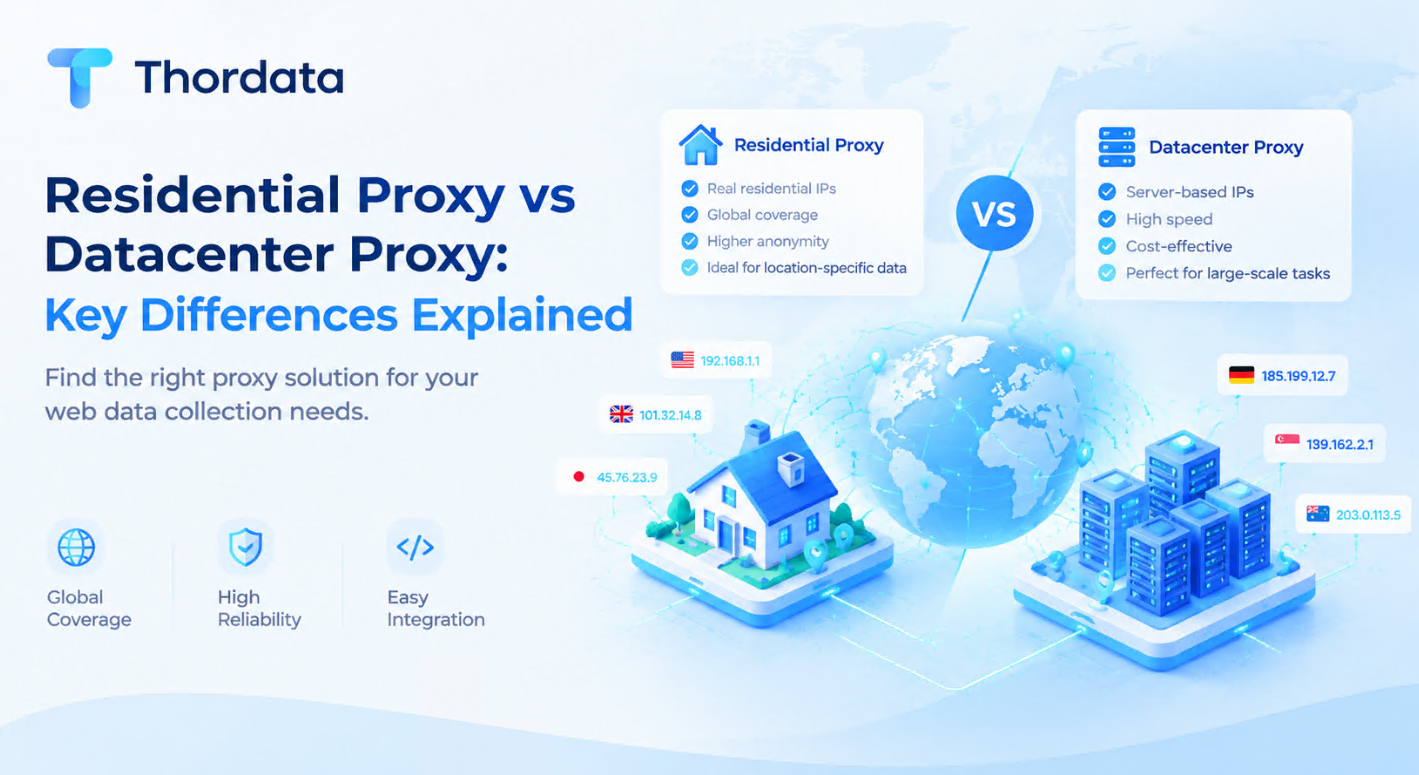
Residential Proxy vs Datacenter Proxy: Key Differences Explained
Learn the differences between ...
flora
2026-09-23

同一份工作負載,三種公司規模:Decodo 與 Thordata 的分階段計價
「哪個抓取平台更便宜」是錯的問題,因為答案隨成長而變。
Xyla Huxley
2026-09-22

行動 IP 是另一種產品:4G/5G、住宅與資料中心的訊號報告
買代理的人把「住宅」與「行動」當成同一種東西的兩個價格帶。
Xyla Huxley
2026-09-22
直接抄走這份設計文件:不會過時的影片推薦訓練資料
多數影片推薦系統的衰退,不是模型錯了,而是訓練資料凍住了—— ...
Xyla Huxley
2026-09-22

為什麼你的商品 Feed 永遠對不上供應商的:一份現場診斷
目錄錯配——同一個商品以三筆不同紀錄存在於你的 Feed、供 ...
Xyla Huxley
2026-09-22

90 秒完售:搶購監控團隊在倒數開始前就做錯的事
限量發售——球鞋、主機補貨、演唱會門票——是電商裡最惡劣的資 ...
Xyla Huxley
2026-09-22

Same Workload, Three Sizes of Company: Decodo and Thordata Priced at Every Stage
"Which scraping platform is ch ...
Xyla Huxley
2026-09-21