


Web Scraper API
Fetch real-time data from 100+ websites,No development or maintenance required.
SCRAPING SOLUTIONS
Get accurate and in real-time results sourced from Google, Bing, and more.
With 120+ prebuilt and custom scrapers ready for any use case.
No blocks, no CAPTCHAs—unlock websites seamlessly at scale.
Execute scripts in stealth browsers with full rendering and automation
PROXY INFRASTRUCTURE
Over 100 million real residential IPs from genuine users across 190+ countries.
Reliable mobile data extraction, powered by real 4G/5G mobile IPs.
For time-sensitive tasks, utilize residential IPs with unlimited bandwidth.
Fast and cost-efficient IPs optimized for large-scale scraping.
SCRAPING SOLUTIONS
PROXY INFRASTRUCTURE
DATA FEEDS
Full details on all features, parameters, and integrations, with code samples in every major language.
LEARNING HUB
ALL LOCATIONS Proxy Locations
TOOLS
RESELLER
Get up to 50%
Contact sales:partner@thordata.com
Products $/GB
Fetch real-time data from 100+ websites,No development or maintenance required.
Get real-time results from search engines. Only pay for successful responses.
Execute scripts in stealth browsers with full rendering and automation.
Bid farewell to CAPTCHAs and anti-scraping, scrape public sites effortlessly.
Dataset Marketplace Pre-collected data from 100+ domains.
Over 100 million real residential IPs from genuine users across 190+ countries.
Reliable mobile data extraction, powered by real 4G/5G mobile IPs.
For time-sensitive tasks, utilize residential IPs with unlimited bandwidth.
Fast and cost-efficient IPs optimized for large-scale scraping.

Data for AI $/GB
Pricing $0/GB
Docs $/GB
Full details on all features, parameters, and integrations, with code samples in every major language.
Resource $/GB
EN $/GB
产品 $/GB
AI数据 $/GB
定价 $0/GB
产品文档 $/GB
资源 $/GB
简体中文 $/GB
Blog
Proxieshow-to-bypass-anti-scraping-blocks-4-practical-tips-for-reliable-data-collection-in-2026

Facing frequent IP bans, CAPTCHAs, or rate limits during web scraping? Here are four battle-tested strategies to help engineering teams boost success rates and maintain stable data pipelines.
For developers and data engineers, dealing with anti-scraping mechanisms is an ongoing challenge. When your scraping script hits a wall of HTTP 403 errors, endless CAPTCHAs, or sudden IP blocks just minutes into a run, your project timeline stalls.
Relying on hardcoded scripts or basic datacenter IPs is no longer enough. Based on real-world engineering practices, here are four practical tips to improve your scraping reliability:
Many websites maintain strict blacklist policies against known datacenter IP ranges. In contrast, using real residential IPs makes your automated traffic look like everyday browsing from actual household networks. Spreading requests across a global pool of residential nodes significantly reduces block rates.
IP masking is only half the battle; browser fingerprints and request patterns matter just as much. Avoid fixed, mechanical request intervals by introducing randomized delays. Pair this with clean User-Agent headers to keep your automated scripts looking natural.
If your primary goal is building AI models or market analysis rather than maintaining brittle scrapers, utilizing pre-collected, structured datasets is often the most efficient route. This allows your team to focus on core product value instead of constant maintenance.
At a scale of millions or billions of records, single-point data transfers are prone to failure. Direct cloud synchronization (such as S3) combined with API-based delivery and built-in retry mechanisms ensures long-term pipeline stability.
 Looking for
Top-Tier Residential Proxies?您在寻找顶级高质量的住宅代理吗?
Looking for
Top-Tier Residential Proxies?您在寻找顶级高质量的住宅代理吗?
Buy Residential Proxies: What to Check Before You Order
Compare residential proxy loca ...
Greta
2026-09-17
逐工作負載的 Bright Data 遷移指南(你不需要全部搬走)
整家供應商的遷移會失敗;逐工作負載的路由會贏。Bright ...
Xyla Huxley
2026-09-17
買影片資料集之前:14 個幫你省下一季白費工程的問題
多數影片資料集的採購會失望,原因都一樣三樣:標題數字的意思跟 ...
Xyla Huxley
2026-09-17
語音資料的五個迷思:以及聲音團隊實際需要的東西
語音與聲音模型在生產環境失敗的原因,多半可以追溯到五個關於訓 ...
Xyla Huxley
2026-09-17

你的 SEO 儀表板說一切正常,你的 AI 搜尋能見度說:才不是
品牌能見度已經分裂成兩層:經典的十條藍色連結 SERP,以及 ...
Xyla Huxley
2026-09-17
你的連鎖餐廳 Google 商家資料,正在悄悄壞掉:多店據點監控現場指南
擁有 200 家分店的品牌,問題不是「一個 Google 商 ...
Xyla Huxley
2026-09-17
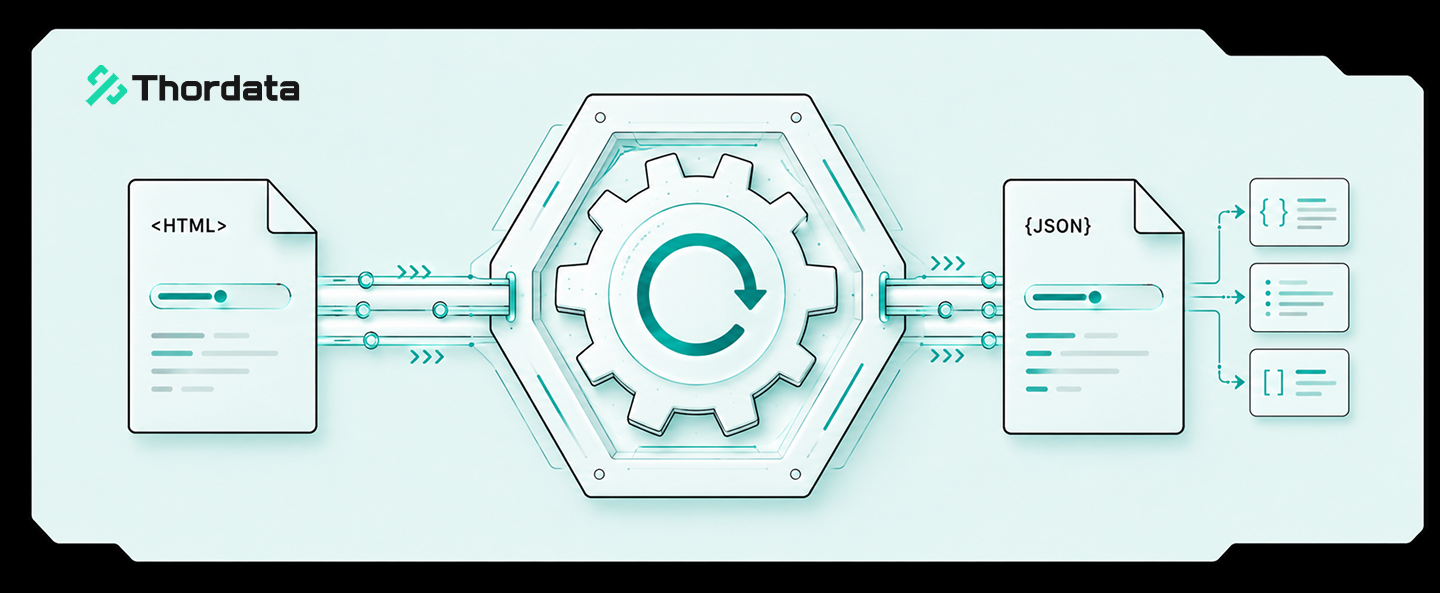
How to Test a Residential Proxy: Speed, Location, and Reliability Checklist
Test residential proxy speed, ...
greta
2026-09-16
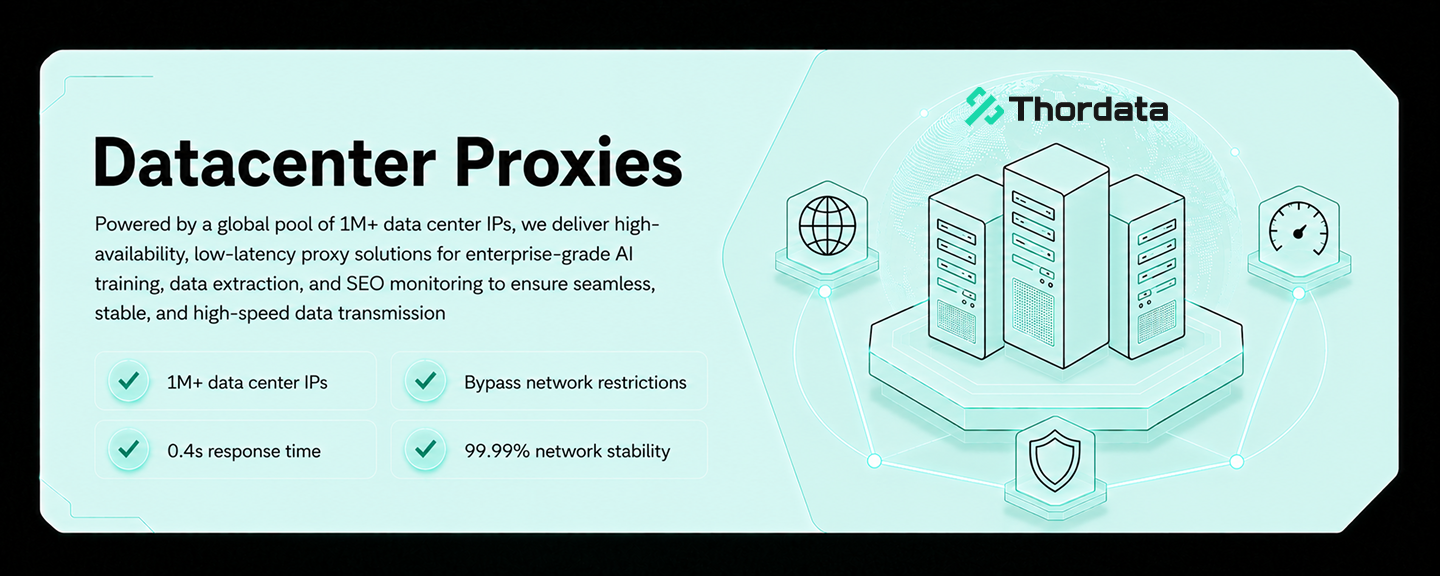
Evaluating a Scraping API on Engineering Criteria, Not Marketing Claims: Oxylabs and Thordata, Rubric-Style
Vendor evaluations drift to wh ...
Xyla Huxley
2026-09-16

Does Your Product Work in São Paulo? A Geo-Testing Lab Notebook, With Providers Compared
Teams ship localized products ...
Xyla Huxley
2026-09-16