


Web Scraper API
Fetch real-time data from 100+ websites,No development or maintenance required.
SCRAPING SOLUTIONS
Get accurate and in real-time results sourced from Google, Bing, and more.
With 120+ prebuilt and custom scrapers ready for any use case.
No blocks, no CAPTCHAs—unlock websites seamlessly at scale.
Execute scripts in stealth browsers with full rendering and automation
PROXY INFRASTRUCTURE
Over 100 million real residential IPs from genuine users across 190+ countries.
Reliable mobile data extraction, powered by real 4G/5G mobile IPs.
For time-sensitive tasks, utilize residential IPs with unlimited bandwidth.
Fast and cost-efficient IPs optimized for large-scale scraping.
SCRAPING SOLUTIONS
PROXY INFRASTRUCTURE
DATA FEEDS
Full details on all features, parameters, and integrations, with code samples in every major language.
LEARNING HUB
ALL LOCATIONS Proxy Locations
TOOLS
RESELLER
Get up to 50%
Contact sales:partner@thordata.com
Products $/GB
Fetch real-time data from 100+ websites,No development or maintenance required.
Get real-time results from search engines. Only pay for successful responses.
Execute scripts in stealth browsers with full rendering and automation.
Bid farewell to CAPTCHAs and anti-scraping, scrape public sites effortlessly.
Dataset Marketplace Pre-collected data from 100+ domains.
Over 100 million real residential IPs from genuine users across 190+ countries.
Reliable mobile data extraction, powered by real 4G/5G mobile IPs.
For time-sensitive tasks, utilize residential IPs with unlimited bandwidth.
Fast and cost-efficient IPs optimized for large-scale scraping.

Data for AI $/GB
Pricing $0/GB
Docs $/GB
Full details on all features, parameters, and integrations, with code samples in every major language.
Resource $/GB
EN $/GB
产品 $/GB
AI数据 $/GB
定价 $0/GB
产品文档 $/GB
资源 $/GB
简体中文 $/GB
The race to build AI products that answer from the live web created a new buying category — the “search API for AI” — and the teams evaluating it are mostly comparing the wrong axis. Latency and result quality matter less than three AI-specific properties: structured output the model can consume without parsing, freshness guarantees the answer can cite, and pricing that survives per-token economics. This is the selection guide, built around those three axes.
The buyers in this category aren’t SEO teams — they’re AI engineers building research agents, RAG pipelines that need a live layer, and answer engines whose credibility depends on citations that aren’t months old. Their search terms say it directly: “search api for ai,” “web search api for llm,” “rag search api.” What they’re shopping for is a search backend that treats a language model as its first-class consumer.
That reframing changes every axis of the comparison, because a model’s consumption pattern differs from a human’s:
| Property | Human consumer | Model consumer |
|---|---|---|
| Output format | Rendered page is fine | Structured JSON/Markdown; HTML is a parsing tax paid per request |
| Freshness | “Recent” suffices | A citable timestamp; the answer inherits the observation’s age |
| Failure mode | Retry manually | Retry burns tokens and time; failures must be cheap |
| Volume profile | Steady, human-paced | Spiky, agent-paced; a research job fires dozens of calls in minutes |
| Cost center | Licenses | Compute; every parsing step competes with tokens for budget |
The quiet killer of naive integrations: an API that returns HTML or loosely structured JSON, forcing a parsing layer between the search and the model — and every parsing layer is a failure surface, a latency tax, and an engineering queue item. The property to demand: stable, documented schemas with the fields a model reasons over — organic results, features, timestamps, geo — delivered as structured JSON or clean Markdown. Thordata’s SERP API answers this shape natively (structured responses across Google, Bing, and vertical engines), which is also why its MCP server exists: same machinery, delivered where agents discover and drive it themselves.
For MCP-connected agents specifically, the consumption question resolves even further: a hosted Model Context Protocol endpoint lets the agent read the engine schemas as resources, choose its own parameters, and normalize errors as tool errors it can react to. The Thordata MCP server implements exactly this — agents connect once, discover search plus history and statistics tools, and the setup is a one-line configuration in Claude Desktop, Cursor, Cline, Windsurf, or any MCP/JSON-RPC runtime.
An AI product’s answer is only as current as its freshest observation, and “fresh” needs to be a contract, not a vibe:
The failure story that sells this axis: the AI product that confidently answered a pricing question from results collected before a market-wide update, with no timestamp to betray the staleness. Structured freshness fields are the difference between an answer and a guess wearing an answer’s clothes.
Agents fire bursts. A research workflow that a human would pace over an afternoon executes in ninety seconds, dozens of sequential searches, retries on ambiguity. Two pricing properties matter under that pattern: failures must be cheap or free, and the unit must scale linearly. Thordata’s SERP API bills per successful response — roughly $0.70–$1.20 per 1,000 responses by volume — and the MCP tier extends the same balance (new accounts start with 500 free calls, no credit card, no separate MCP subscription: it draws on the existing SERP response balance). Compare that mental model against any per-seat or per-month arrangement and the difference surfaces in week two of an agent deployment, when a workflow change triples call volume overnight.
Query → Agent (LLM)
          ├─ live search tool (MCP or API)  → structured, timestamped evidence
          ├─ RAG corpus (licensed datasets)  → depth, history, stable knowledge
          └─ scheduled monitoring (SERP feed) → trends recorded for next quarter's corpus
The three layers share one backend in the strongest setups — live answers at request time, corpus for depth, monitoring recording today’s answers into tomorrow’s history — because a single schema across layers means the agent’s citations and the warehouse’s records describe one consistent world.
We already use a search API for our human-facing search box. Same product for AI?
Sometimes — check the three axes. If it returns rendered-oriented payloads, has no freshness contract, or prices by seat, it was built for a different consumer. The AI-specific category exists because the consumption pattern genuinely differs.
Why not let the LLM provider’s built-in web search handle it?
For prototyping, do. For products, the limitations surface fast: opaque freshness, limited geo and device control, no access to your own search history, and pricing bundled into token economics where a bursty research job costs more than the same calls at per-response rates. Control over what the model sees is a product feature; renting it back from a bundle is a product tax.
What does an MCP connection change operationally?
Division of labor: with a plain API, your code builds every request; with an MCP endpoint, the agent reads the tool schemas and drives the search itself — including choosing geography and device parameters when the task needs them. The MCP server also exposes request history and usage statistics as tools, so agents can audit what they searched and what it cost. For autonomous workflows, that self-knowledge is the difference between a tool and a dependency you babysit.
How do we evaluate before committing?
The 500-free-call MCP tier exists for exactly this: connect one client, give an agent one research task requiring current answers, and watch the citations appear. Then run the same task through the raw API to compare integration shapes. A week of evaluation, zero spend, and the axis scores above become your own numbers instead of this guide’s.
What about monitoring the queries our market actually asks?
That’s the demand-side layer running on the same backend: scheduled structured collection of your category’s queries — geo-pinned, timestamped — feeding both your product roadmap and your content strategy. Agents that can search live at reasoning time answer today’s questions; the recorded observations tell you which questions tomorrow will bring, and the MCP endpoint makes recording them an agent habit rather than a cron job.
The guide’s one-line summary: a search API for AI is a model-consumption product — structured output, citable freshness, burst-surviving prices — and the vendors that built for that consumer, MCP-first and per-response-priced, are the ones whose evaluation weeks end in adoption.
 Looking for
Top-Tier Residential Proxies?您在寻找顶级高质量的住宅代理吗?

How to Scrape Video Data at Scale: A Practical Workflow
This guide covers ways to collect video search results, platform metadata, comments and media files at scale. It explains bulk workflows, quality checks, costs and permissions, and how to choose a collection path based on the required output.
Unknown
2026-10-27
爬蟲一直吃 403?先別換代理——認識 Unlocker 與 Scraper API 的分工
團隊被網站封鎖時的第一反應通常是「換代理、加重試」——把症狀 ...
Xyla Huxley
2026-10-27
SERP API in Python: A Working Developer’s Tutorial (With the Traps Marked)
“serp api python” is one of the highest-int […]
Unknown
2026-10-27
Retiring the Beast: A Farewell Letter to Our E-Commerce Scraper
The most-requested migration s ...
Xyla Huxley
2026-10-27
403, 429, and a Wall of CAPTCHAs: The Emergency Room Guide for Blocked Scrapers
Every scraping pipeline eventu ...
Xyla Huxley
2026-10-27
How to Scrape TikTok Videos: Methods and Limits
Scraping TikTok videos means c ...
Xyla Huxley
2026-10-27
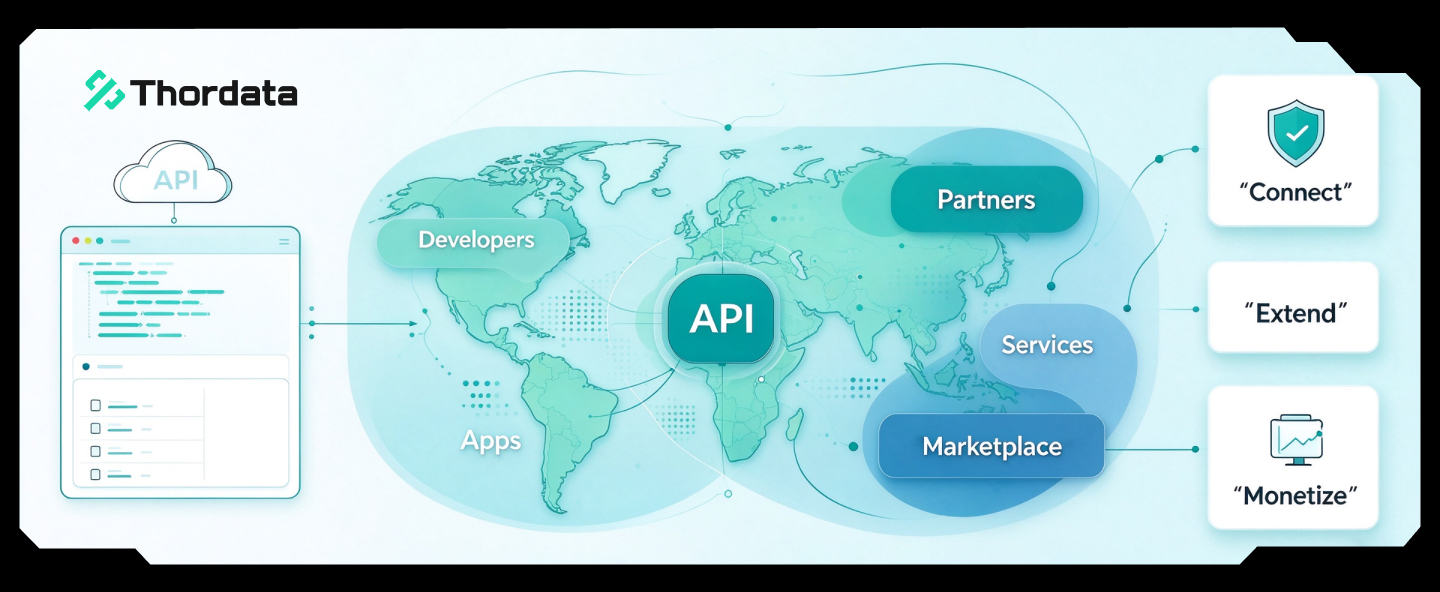
隱形矽基生態:Thordata 抓取流覽器如何成為 AI 大模型的“數字喂料機”
在生成式人工智慧(Generative AI)與具身智能(E ...
Xyla Huxley
2026-10-26
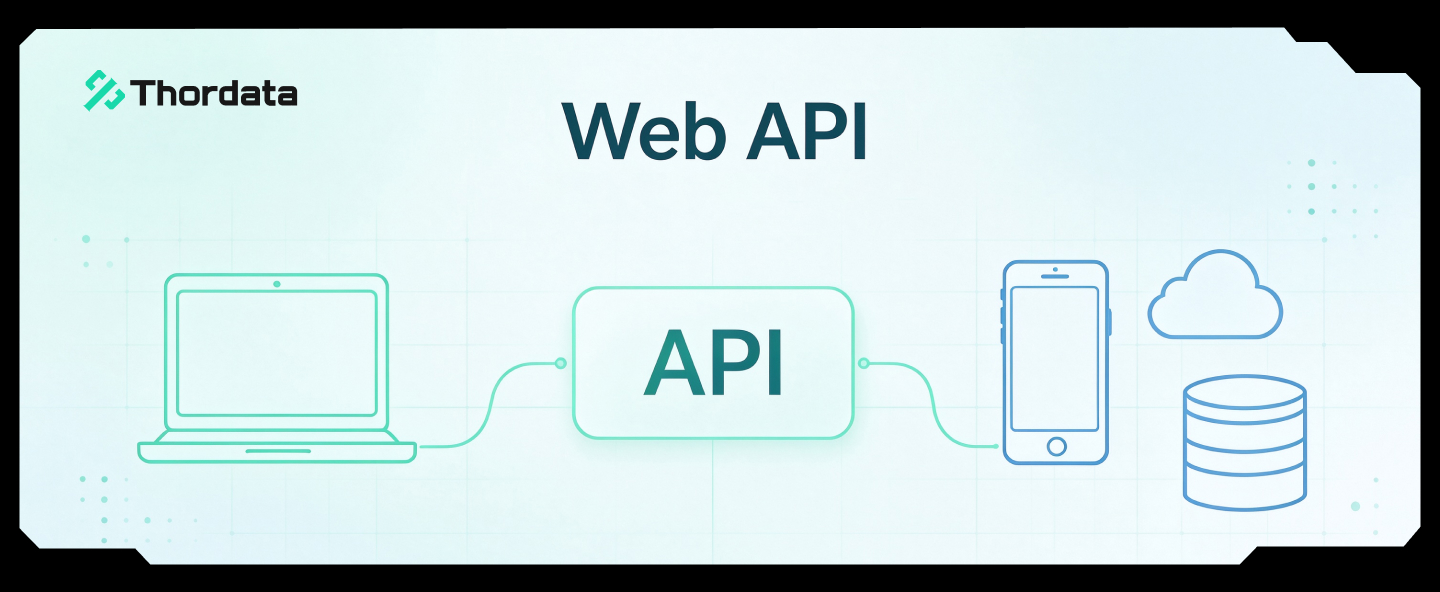
The SERP API, Explained: How Search-Result Data Shapes Smarter Advertising
Every search ends the same way ...
Xyla Huxley
2026-10-26
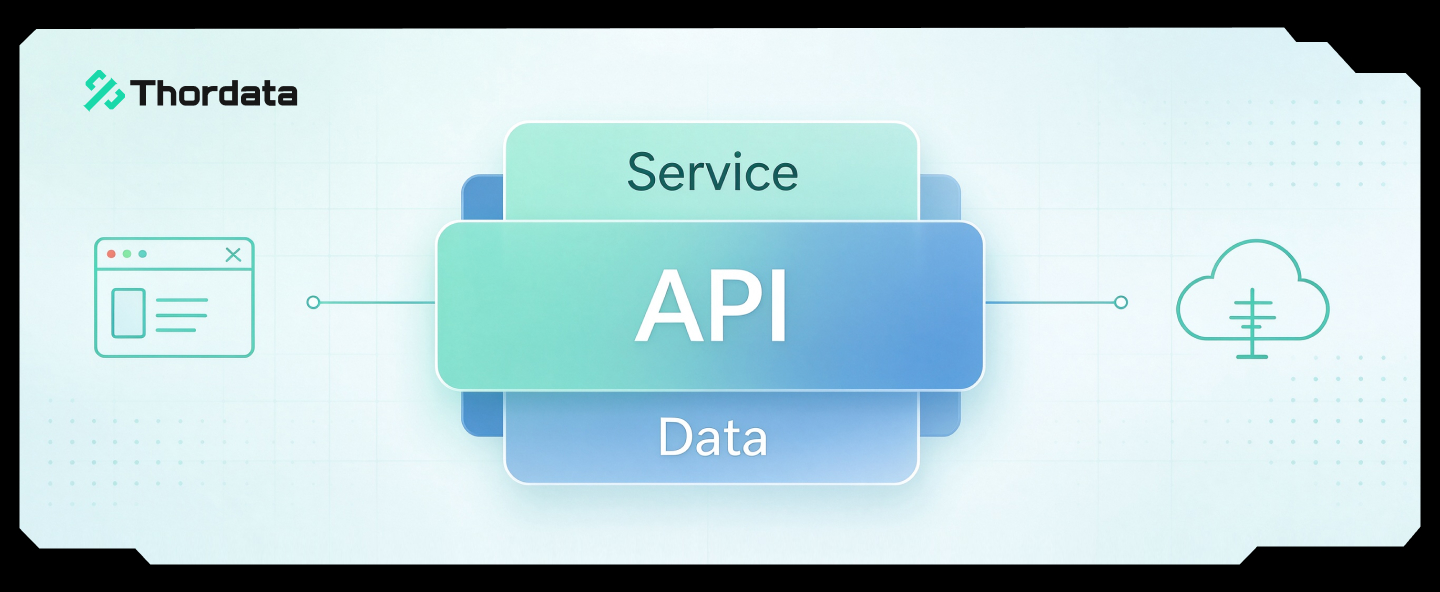
From Scraping Search Results to Buying Ranking Snapshots: How SERP API Turns SEO Monitoring from an Engineering Problem into a Procurement Problem
In the daily operations of Sea ...
Xyla Huxley
2026-10-24