


Web Scraper API
Fetch real-time data from 100+ websites,No development or maintenance required.
SCRAPING SOLUTIONS
Get accurate and in real-time results sourced from Google, Bing, and more.
With 120+ prebuilt and custom scrapers ready for any use case.
No blocks, no CAPTCHAs—unlock websites seamlessly at scale.
Execute scripts in stealth browsers with full rendering and automation
PROXY INFRASTRUCTURE
Over 100 million real residential IPs from genuine users across 190+ countries.
Reliable mobile data extraction, powered by real 4G/5G mobile IPs.
For time-sensitive tasks, utilize residential IPs with unlimited bandwidth.
Fast and cost-efficient IPs optimized for large-scale scraping.
SCRAPING SOLUTIONS
PROXY INFRASTRUCTURE
DATA FEEDS
Full details on all features, parameters, and integrations, with code samples in every major language.
LEARNING HUB
ALL LOCATIONS Proxy Locations
TOOLS
RESELLER
Get up to 50%
Contact sales:partner@thordata.com
Products $/GB
Fetch real-time data from 100+ websites,No development or maintenance required.
Get real-time results from search engines. Only pay for successful responses.
Execute scripts in stealth browsers with full rendering and automation.
Bid farewell to CAPTCHAs and anti-scraping, scrape public sites effortlessly.
Dataset Marketplace Pre-collected data from 100+ domains.
Over 100 million real residential IPs from genuine users across 190+ countries.
Reliable mobile data extraction, powered by real 4G/5G mobile IPs.
For time-sensitive tasks, utilize residential IPs with unlimited bandwidth.
Fast and cost-efficient IPs optimized for large-scale scraping.

Data for AI $/GB
Pricing $0/GB
Docs $/GB
Full details on all features, parameters, and integrations, with code samples in every major language.
Resource $/GB
EN $/GB
产品 $/GB
AI数据 $/GB
定价 $0/GB
产品文档 $/GB
资源 $/GB
简体中文 $/GB
Every search ends the same way: a page crowded with information — a handful of organic links, a few sponsored results, sometimes a local map block, occasionally a shopping carousel or a news strip. Most people treat that page as something to scroll past. For a business, however, it is one of the most revealing data sources available: a live snapshot of what customers see, what competitors are doing, and where attention is going. A SERP API is the tool that turns this snapshot into a clean, repeatable stream of structured data.
A SERP API — a search engine results page API — is a web service. You send it a query, such as “best running shoes,” along with a few parameters like country, language, or device, and it returns the results page as structured data, usually JSON. Behind the scenes, the provider runs real searches through managed infrastructure, renders pages that rely on JavaScript, and parses the output into fields such as position, title, URL, snippet, ratings, ad details, and more.
This packaging matters because raw search results were never designed for machines. Pages change constantly, layouts shift, and much of the content is generated only after the page loads. An API takes all that instability and turns it into something a program can read reliably. The question it answers is simple yet powerful: what is Google — or Bing, Yandex, or DuckDuckGo — showing right now for this query?
For advertising teams, the fields that matter most are the ad-specific ones: the position of paid results, the ad copy itself, the displayed URL, and whether the top of the page is dominated by sponsored entries. These details are not always obvious in a casual page view, but they are exactly what an advertiser needs to plan and measure.
A modern results page is not a single list; it is several layers stacked together:
Organic listings, ranked by relevance.
Paid ads, including the ad copy itself.
The local pack, showing nearby businesses with maps and reviews.
Shopping results, with prices and merchants.
Image, video, and news sections.
Knowledge panels and related questions.
Each layer tells a different story. Organic rankings reveal authority and SEO health. The presence and density of ads show how contested a market is. Local listings expose the competitive landscape in a specific area. Together they form a fairly complete picture of the search landscape for any topic.
For someone running search advertising, this is not an academic exercise; it feeds directly into everyday decisions:
Keyword research. You can see which queries actually trigger ads and which do not — a distinction that budget allocation depends on.
Competitive intelligence. Reading competitors’ ad copy at scale reveals messaging patterns: the promises being made, the offers that recur, and how prices are framed.
Bidding and budget. A results page crowded with paid results signals a contested auction and higher costs; if organic results dominate, ad pressure may be lower.
Position verification. You can check where your own ad actually appears versus where the platform reports it, and how often competitors displace it.
Local performance. For businesses that rely on foot traffic, the local pack is often the most valuable real estate on the page.
The unifying idea is simple: advertising decisions should rest on what actually appears in search, not on assumptions. A SERP API turns observation into a routine, repeatable input for those decisions.
Used this way, SERP data becomes a steady input rather than a one-off report. Teams often schedule queries to run at regular intervals, so they can watch a market change over weeks: when a new competitor enters, when a promotion reshuffles the ad landscape, or when a landing page quietly changes its offer.
Working with SERP data involves a few genuine constraints worth understanding before you build anything. First, results are paginated. What appears on page one is not the full index, so an API must let you navigate pages systematically. Second, output needs parsing: fields must be extracted from raw JSON, cleaned, and stored in a consistent shape. Third, rate limits are real. Search engines throttle aggressively, and responsible providers enforce limits so that a single account cannot hammer the service. Dynamic content matters too — some results appear only after JavaScript runs, so the API must render pages rather than simply fetch raw HTML.
These are engineering details, but they explain why “just fetch the page” is rarely enough at scale, and why a purpose-built API exists in the first place.
A growing number of services provide SERP data — Thordata’s SERP API is one example among them. When evaluating any of them, the practical checklist is usually the same: query coverage and parameters, data quality and consistency, pricing model, free trial, and whether pagination and rendering are handled for you.
A free trial is a good place to start. It lets you test data quality against real queries before committing, and it quickly reveals how much engineering work a provider actually saves you — from handling rendering to keeping the response format stable.
It is equally important to use the data responsibly. “Scraping” is not legal or illegal in the abstract; it depends entirely on how it is done. Respect robots.txt and a site’s terms of service, avoid collecting personal information, and use reasonable volumes rather than aggressive hammering. Good tools enforce these boundaries on your behalf, and that is part of their value.
Search results are a public, constantly changing record of what people see and what businesses compete for.
A SERP API turns that record into usable data. The real value is not the API itself — it is the discipline of making advertising decisions from what actually appears on the page rather than from intuition. For teams doing keyword research, bid management, or competitive analysis, that simple shift can change how decisions are made.
 Looking for
Top-Tier Residential Proxies?您在寻找顶级高质量的住宅代理吗?

How to Scrape Video Data at Scale: A Practical Workflow
This guide covers ways to collect video search results, platform metadata, comments and media files at scale. It explains bulk workflows, quality checks, costs and permissions, and how to choose a collection path based on the required output.
Unknown
2026-10-27
爬蟲一直吃 403?先別換代理——認識 Unlocker 與 Scraper API 的分工
團隊被網站封鎖時的第一反應通常是「換代理、加重試」——把症狀 ...
Xyla Huxley
2026-10-27
SERP API in Python: A Working Developer’s Tutorial (With the Traps Marked)
“serp api python” is one of the highest-int […]
Unknown
2026-10-27
Retiring the Beast: A Farewell Letter to Our E-Commerce Scraper
The most-requested migration s ...
Xyla Huxley
2026-10-27
403, 429, and a Wall of CAPTCHAs: The Emergency Room Guide for Blocked Scrapers
Every scraping pipeline eventu ...
Xyla Huxley
2026-10-27
Your LLM Thinks It Knows Today: Choosing a Search API for AI Workloads
The race to build AI products ...
Xyla Huxley
2026-10-27
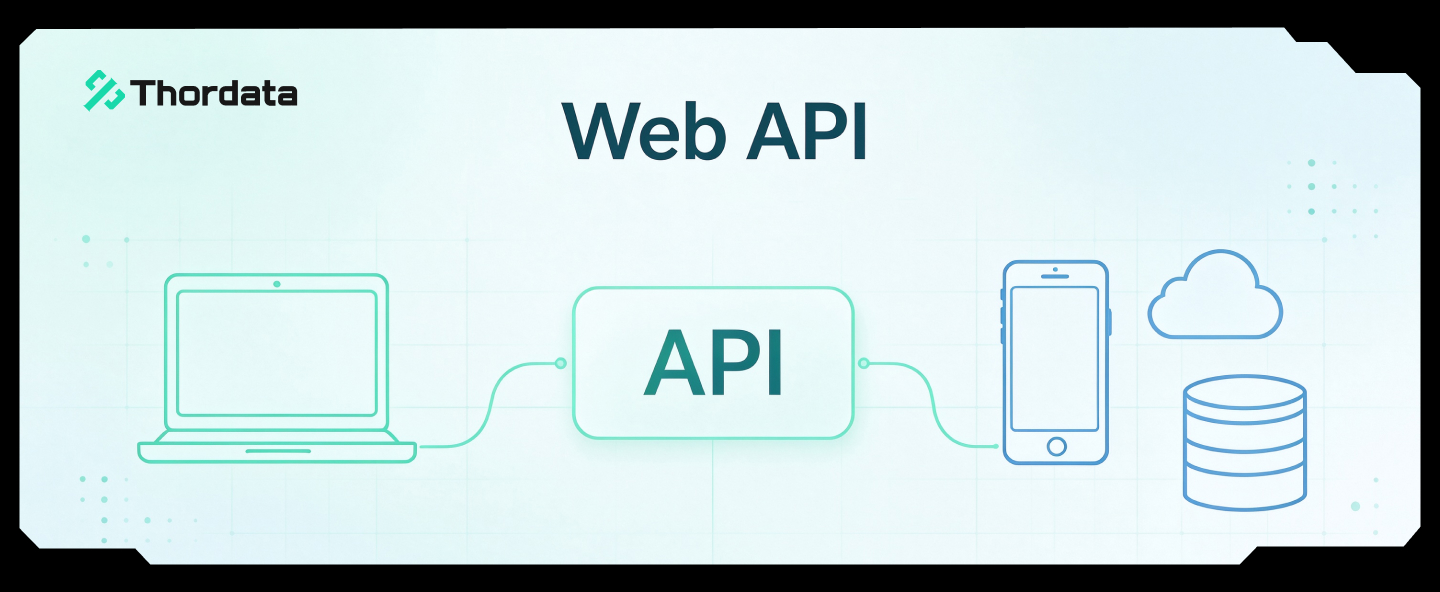
How to Scrape TikTok Videos: Methods and Limits
Scraping TikTok videos means c ...
Xyla Huxley
2026-10-27
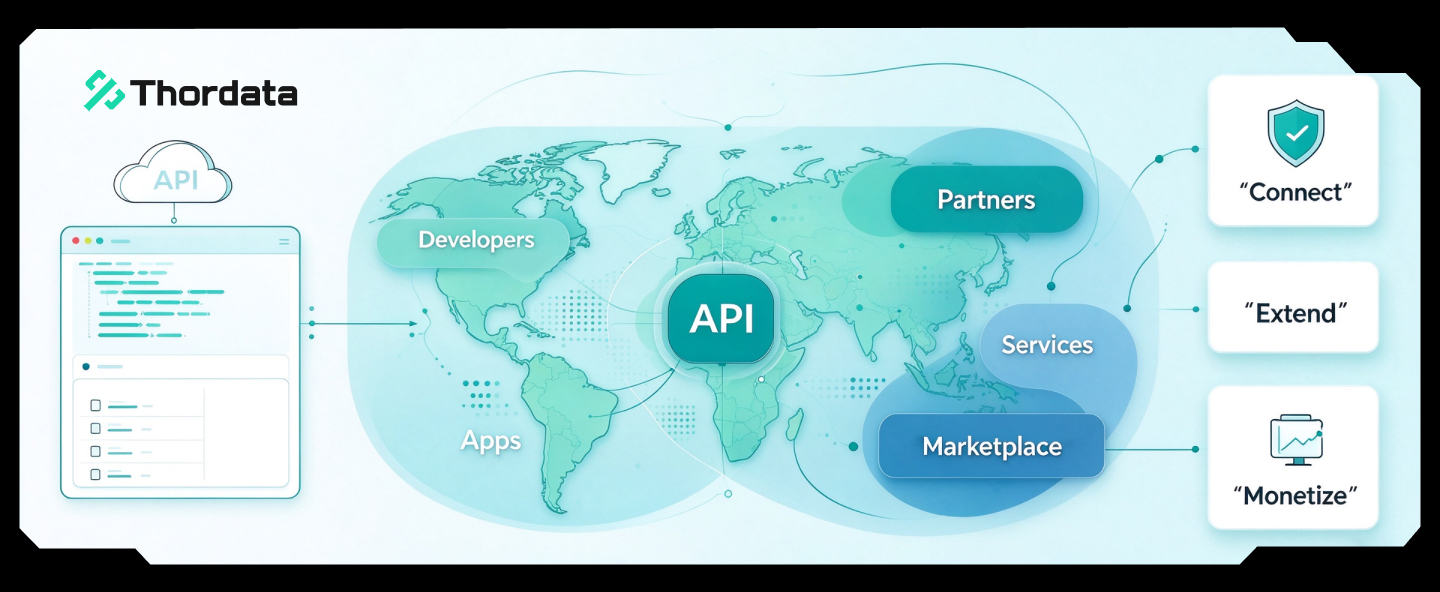
隱形矽基生態:Thordata 抓取流覽器如何成為 AI 大模型的“數字喂料機”
在生成式人工智慧(Generative AI)與具身智能(E ...
Xyla Huxley
2026-10-26
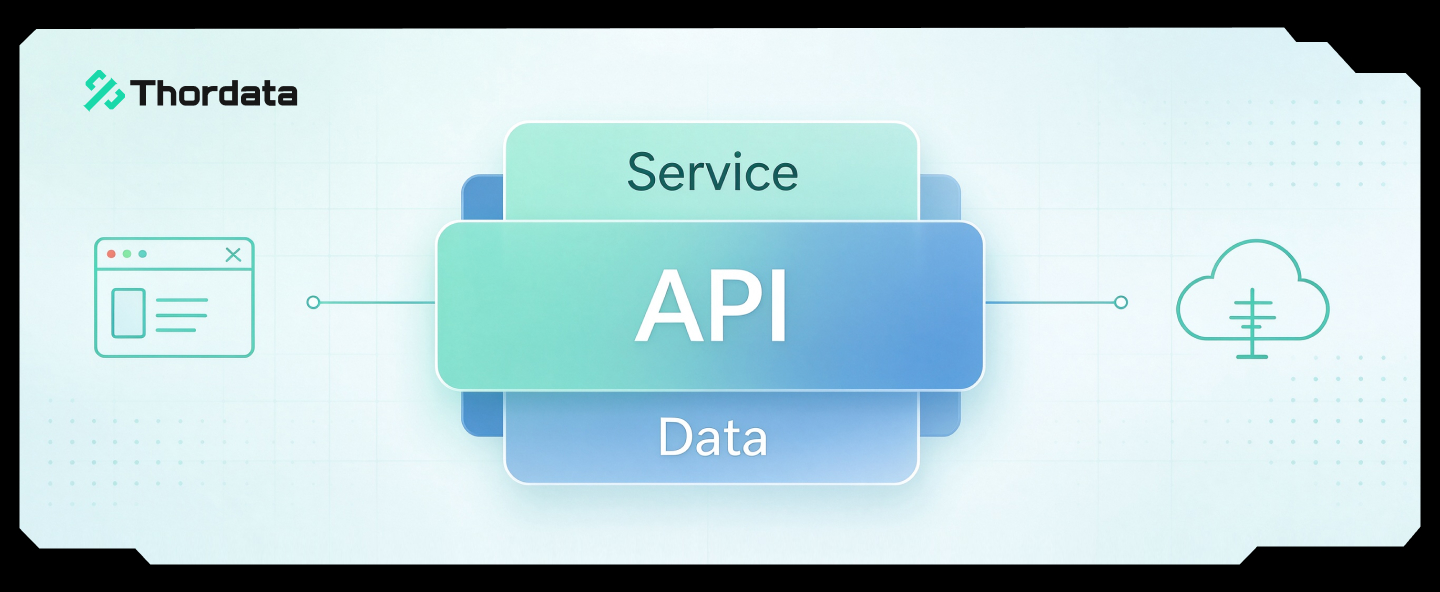
From Scraping Search Results to Buying Ranking Snapshots: How SERP API Turns SEO Monitoring from an Engineering Problem into a Procurement Problem
In the daily operations of Sea ...
Xyla Huxley
2026-10-24