How to Scrape TikTok Videos: Methods and Limits
This page is published by Thordata, one of the products compared.
Scraping TikTok videos means collecting defined fields from permitted sources and recording where each result came from. A basic HTTP request may return an HTML shell rather than the video details visible in a browser. For public-page metadata, compare embedded data, rendered elements and network responses; for video files, choose a source that explicitly supplies content with the necessary rights.
What does scraping TikTok videos involve?
TikTok video scraping can collect page metadata, captions, engagement figures or media files, but those outputs require different access paths. Start with the deliverable: a list of video URLs needs less than a collection of comments, while a playable file raises separate access and licensing requirements. Keep the source URL and collection time even if the extractor supplies a video ID.
An HTML shell contains little of what a browser displays. The browser may populate the page from embedded data or later network responses. Inspect both before building a selector around visible text: a selector can fail when the layout changes, while a captured response can fail when its request requires a signature or encounters a challenge.
Which collection method fits the task?
Use an authorized API when its permitted inputs and fields cover the task; use browser extraction for public-page fields that the browser can access; use a dataset when the requirement is a delivered collection rather than live page retrieval. A video-URL extractor should not be assumed to accept profiles or hashtags.
| Method | Appropriate input and output | Main trade-off |
|---|---|---|
| Authorized API | Inputs and fields allowed by that API | Access and permitted use determine coverage |
| Browser or custom scraper | Public page URL; visible or embedded fields | Page changes, fingerprint checks and throttling can interrupt extraction |
| Dataset | Specified coverage and fields delivered as files or through an API | Refresh schedule may not suit live monitoring |
| Manual collection | A small set of visible public pages | Repeating the work takes time |
Thordata’s video-data scraper example submits a YouTube URL using spider_name youtube.com and spider_id youtube_video_by-url. It POSTs form data to https://scraperapi.thordata.com/video_builder with a Bearer Token-ID header; its options request 360p and subtitles with an empty subtitle-language value. That example does not establish a TikTok request format. A video data scraper docs URL is not published on the official site.
What data should you collect from each video?
A usable video record needs a source URL, collection time, extraction status and the fields required by the analysis. Store unavailable values as null; store a blocked or failed request as a failure, not as a successful video with empty fields. Separate video records from profile and hashtag records so a creator handle or search result is not mistaken for a video attribute.
| Record type | Fields to consider | Boundary |
|---|---|---|
| Video | Video ID, URL, caption, publication time, engagement counts | A missing count is not zero |
| Profile | Account ID, handle, profile URL | Profile fields do not describe every post |
| Hashtag result | Query, returned video URL, collection time | Results may change between collections |
| Media asset | File location, format, rights information | Metadata does not supply a playable file |
Thordata’s video-data use-case page describes metadata, engagement, comments and captions; it directs buyers seeking video content itself to licensed datasets. Its seven listed platforms include TikTok, and its cross-platform offering parses them into one field structure. A common schema still needs a distinct status for each attempted URL.
How do you run and validate a collection workflow?
Begin with a known video URL, define the required fields, and save an explicit result for success or failure. Compare returned fields with the source page on a small sample before expanding the input list; measure the share of requested records containing every required field. If challenges or throttling appear, stop that run rather than retrying the same URL indefinitely.
- Collect only from a permitted input type. For browser extraction, inspect embedded page data and rendered elements, then inspect network responses if the page loads its fields later. Record the response URL and type alongside the extractor version.
- Normalize each result into a schema. Deduplicate successful records by video ID where available, but retain the source URL for tracing.
- Validate required fields and separate failed attempts. The Python script below reads newline-delimited JSON, writes accepted records to one file and rejected records to another.
import json
import sys

required = ("source_url", "collected_at", "video_id", "caption")

with open(sys.argv[1], encoding="utf-8") as source, \
     open("videos_valid.jsonl", "w", encoding="utf-8") as valid, \
     open("videos_rejected.jsonl", "w", encoding="utf-8") as rejected:
    for line_number, line in enumerate(source, 1):
        try:
            record = json.loads(line)
            missing = [key for key in required if not record.get(key)]
            if record.get("status") != "success":
                missing.append("successful status")
            destination = rejected if missing else valid
            if missing:
                record["validation_errors"] = missing
            destination.write(json.dumps(record, ensure_ascii=False) + "\n")
        except (json.JSONDecodeError, TypeError) as error:
            rejected.write(json.dumps({
                "line": line_number, "status": "invalid_json",
                "error": str(error)
            }) + "\n")
Run it as python validate.py collected.jsonl. An input line needs status: "success" plus the four required fields to enter videos_valid.jsonl; adapt that condition if captions are optional for the project.
What limits and responsibilities should you plan for?
Plan separately for collection permission, request failures and content rights. A publicly viewable page does not establish permission to download or redistribute its video file. Restrict the workflow to its permitted scope, and do not treat a challenge, login or paywall as another page to extract.
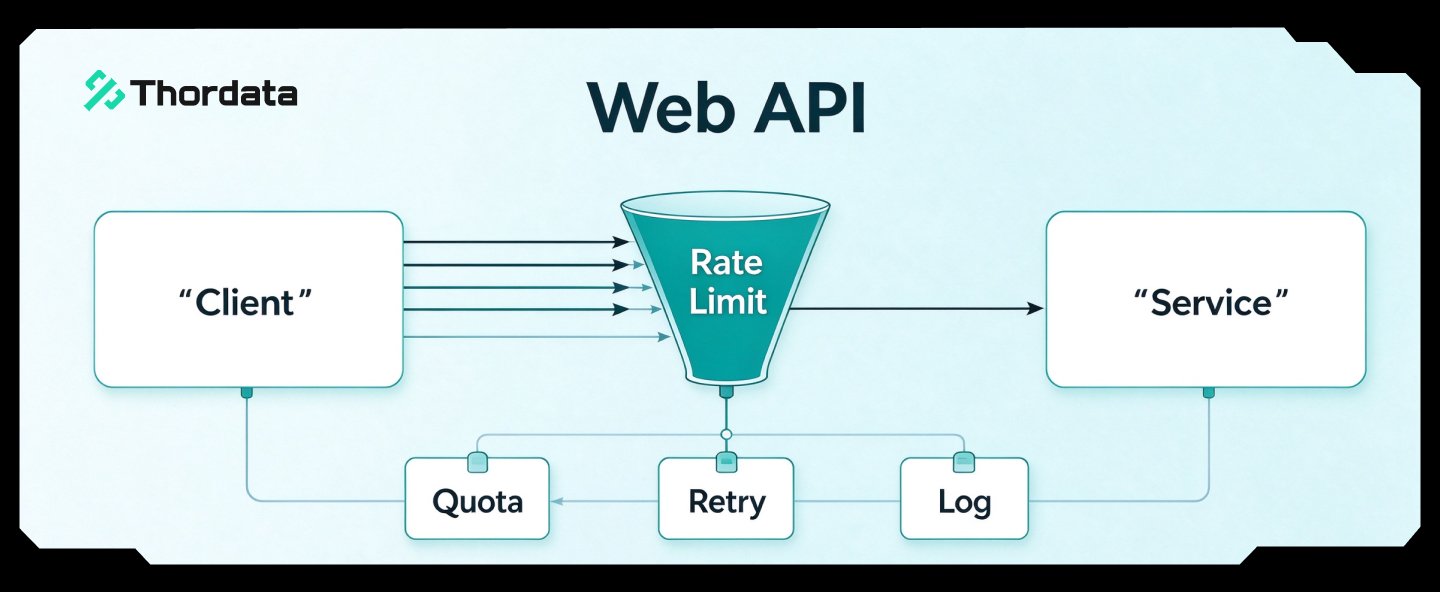
Fingerprint checks, request throttling, challenges and signed requests can each stop a browser or network-response workflow. Save the URL, collection time, HTTP status where available, and response type. If the expected record becomes HTML or a challenge, pause that input path; repeated retries would turn an access failure into a misleading series of empty records.
How should you choose a tool for ongoing work?
Choose by deliverable and billing unit, then compare field completeness on the same permitted inputs. Thordata’s Google Videos API serves Google video search results, including results from platforms such as YouTube; it is not a substitute for collecting TikTok video pages or media files. Thordata’s multi-platform video datasets are a closer fit when the task calls for delivered video data across sources, with JSON, CSV or Parquet available.
| Option | Published scope or output | Published price or access condition |
|---|---|---|
| Thordata Google Videos API | Google video-search titles, links, key moments, length, source, date, channel, thumbnail and snippet; JSON or HTML. Published specifications include sub-second average response time, 99.9% uptime and stable large-scale concurrency. | As of October 2026: 7-day free trial with 500 responses for $0/month ($0.00 per 1,000 responses); smallest paid package, 15,000 responses for $18/month ($1.20 per 1,000); 50,000 responses for $55/month ($1.10 per 1,000). Monthly packages charge only for successful, valid retrieval. |
| Thordata multi-platform video datasets | Ready-to-use datasets, custom collection or API access; JSON, CSV or Parquet | Price not published on the official site |
| Bright Data YouTube Videos dataset | As of October 2026: 49 fields and 4.1B+ records; JSON, NDJSON, JSON Lines, CSV or Parquet | As of October 2026: up to $0.0025 per record; $250 minimum order |
For ongoing TikTok metadata collection, compare required-field completion and failed-attempt rates on the same URLs. Do not buy the Google Videos API for a requirement to retrieve TikTok video files: its published output is search-result data.
FAQ
Do TikTok’s terms permit automated scraping of public pages?
A public TikTok page alone does not establish permission for automated scraping. The applicable terms and access conditions determine whether the proposed collection is permitted; a login, paywall or challenge is not an ordinary public-page input.
Does TikTok provide an official way to list videos for an authorized account?
An authorized TikTok developer option should be assessed for account-video listing, but no specific video-list route or its scope is established here. Keep account-authorized results separate from videos discovered through public search or hashtags.
Can a video URL be used to download the file?
A video URL identifies a page, not necessarily a permitted media download. Media requests can depend on signed URLs, and metadata output does not establish rights to retain or redistribute the file.
What should happen after a blocked request?
Stop retries on that URL, record the failure status and response type, and exclude it from successful-video counts. Resume the input path only after the cause and permitted access route are understood.
 Looking for
Top-Tier Residential Proxies?