


Web Scraper API
Fetch real-time data from 100+ websites,No development or maintenance required.
SCRAPING SOLUTIONS
Get accurate and in real-time results sourced from Google, Bing, and more.
With 120+ prebuilt and custom scrapers ready for any use case.
No blocks, no CAPTCHAs—unlock websites seamlessly at scale.
Execute scripts in stealth browsers with full rendering and automation
PROXY INFRASTRUCTURE
Over 100 million real residential IPs from genuine users across 190+ countries.
Reliable mobile data extraction, powered by real 4G/5G mobile IPs.
For time-sensitive tasks, utilize residential IPs with unlimited bandwidth.
Fast and cost-efficient IPs optimized for large-scale scraping.
SCRAPING SOLUTIONS
PROXY INFRASTRUCTURE
DATA FEEDS
Full details on all features, parameters, and integrations, with code samples in every major language.
LEARNING HUB
ALL LOCATIONS Proxy Locations
TOOLS
RESELLER
Get up to 50%
Contact sales:partner@thordata.com
Products $/GB
Fetch real-time data from 100+ websites,No development or maintenance required.
Get real-time results from search engines. Only pay for successful responses.
Execute scripts in stealth browsers with full rendering and automation.
Bid farewell to CAPTCHAs and anti-scraping, scrape public sites effortlessly.
Dataset Marketplace Pre-collected data from 100+ domains.
Over 100 million real residential IPs from genuine users across 190+ countries.
Reliable mobile data extraction, powered by real 4G/5G mobile IPs.
For time-sensitive tasks, utilize residential IPs with unlimited bandwidth.
Fast and cost-efficient IPs optimized for large-scale scraping.

Data for AI $/GB
Pricing $0/GB
Docs $/GB
Full details on all features, parameters, and integrations, with code samples in every major language.
Resource $/GB
EN $/GB
产品 $/GB
AI数据 $/GB
定价 $0/GB
产品文档 $/GB
资源 $/GB
简体中文 $/GB
<–!>

<–!>

Currently, participants in the real estate market are facing a common challenge: data is either scattered across different platforms, making it difficult to access in a timely manner, or the format is messy and cannot be directly used for analysis.
According to a market analysis report by go2marketresearch, “The global real estate analytics market is projected to grow at a compound annual growth rate (CAGR) of 8% from 2025 to 2033, driven primarily by the ongoing adoption of data analytics in the real estate industry.”
In this context, real estate web scrapers have become a key technical means to obtain structured information from Realtor, Zillow, and various regional MLS systems. In the real estate field, data scraping is not just about “getting the data”; more importantly, it’s about stability, compliance, and scalability. However, not all providers can meet these requirements. In this article, we will conduct an in-depth evaluation of five leading real estate web scraper tool providers to help you efficiently scrape real estate data.
Real estate data is the core driving force for developing investment strategies, assessing market value, and predicting future trends. Whether you are an individual investor or a large developer, lacking precise insights into price fluctuations, rental yields, and regional supply-demand relationships is like navigating blindly in the dark. By choosing web scraping tools, you can break down the information barriers of major platforms, transforming unstructured information scattered across the internet into clear bases for business decisions. As IDC stated in its industry report: “Data-driven real estate companies achieve a 23% higher return on investment than their traditional counterparts.” Therefore, buying real estate data scraping tools has become an essential path to maintaining competitiveness in the industry, allowing you to sense subtle market changes before your competitors do.
To do a good job, one must first sharpen their tools. Choosing the right tool is half the battle for successful real estate data scraping. From fully manual scripts to fully managed cloud services, each tool has its unique advantages. Here is a detailed explanation:
For companies with a technical team, writing custom scripts using Python’s BeautifulSoup or Scrapy framework is the most flexible option. This approach allows you to customize logic based on the structure of the target website or specific real estate scraping needs, but it requires the team to have ongoing development and maintenance capabilities, and you need to personally handle complex issues such as IP rotation, request header management, and distributed architecture, and upgrades in website anti-scraping technology can significantly increase maintenance costs.
Browser plugins are a quick way to scrape real estate data without writing code, providing a visual interface for operation. They are suitable for small-scale, one-time data extraction tasks, with an intuitive interface and a low entry barrier. However, these tools perform poorly when handling large-scale concurrent tasks or extensive data scraping, and they are easily recognized and blocked by the firewalls of target websites.
Web Scraper API are modern solutions for scalable and industrialized acquisition of real estate data, perfectly balancing flexibility and automation. Compared to other tools, the standout feature of Web Scraper API is that they come with built-in proxy services and automatic retry mechanisms, capable of automatically handling JavaScript rendering and complex CAPTCHA challenges. Developers only need to specify the target URL and data fields through API calls to obtain structured JSON data. By buying a Web Scraper API, you can focus your efforts on data analysis without worrying about the collapse of the underlying infrastructure, This one-stop solution greatly reduces the technical barriers and enhances the reliability of data collection.
The choice of scraping tool depends on your technical skills, budget, and the frequency of data updates required. Different types of users face varying pain points and focuses when dealing with vast amounts of property information, so it cannot be generalized.
Below is a simple decision path:
👨🏻💼 Individual investors/beginners
• Overview: Limited budget, low scraping frequency.
• First choice: Browser extensions or providers offering free quotas for Web Scraper API.
📊 Real estate companies/big data analysts
• Overview: Extremely high requirements for data accuracy and latency, needing large-scale concurrency.
• First choice: High-performance real estate Web Scraper API, paired with residential proxies to ensure high success rates.
🏢 Software developers/tech startups
• Overview: Building their own property applications.
• First choice: Enterprise-level Web Scraping API services integrated with residential proxies.
👨🏻💻 Developers/tech enthusiasts
• Overview: Enjoy the building process, with highly customized projects.
• First choice: Use custom crawler scripts + buy third-party proxy services to maintain control while enhancing the robustness of the scripts.
| Provider | IP Rotation | Compatibility | Scalability | Data Format | Setup Difficulty | Free Trial | Pricing (Monthly) |
| Thordata | ✔️ Automatic | Very High | Very High | JSON/CSV/XLSX | Very Easy | ✔️(5,000 Credits – 7 Days Free Trial) | $30/mo |
| ScrapingBee | ✔️ Automatic | High | High | JSON | Easy | ❌ | $49/mo |
| Oxylabs | ✔️ Automatic | Very High | Very High | JSON/HTML | Medium | ✔️ | $49/mo + VAT |
| ScrapeGraphAI | ✔️ Automatic | Medium | Medium | JSON/CSV | High | ✔️ | $85/mo |
| Octoparse | ⚠️ Manual/Automatic | Medium | Medium | Excel/CSV/JSON | Easy | ✔️ | $69/mo |
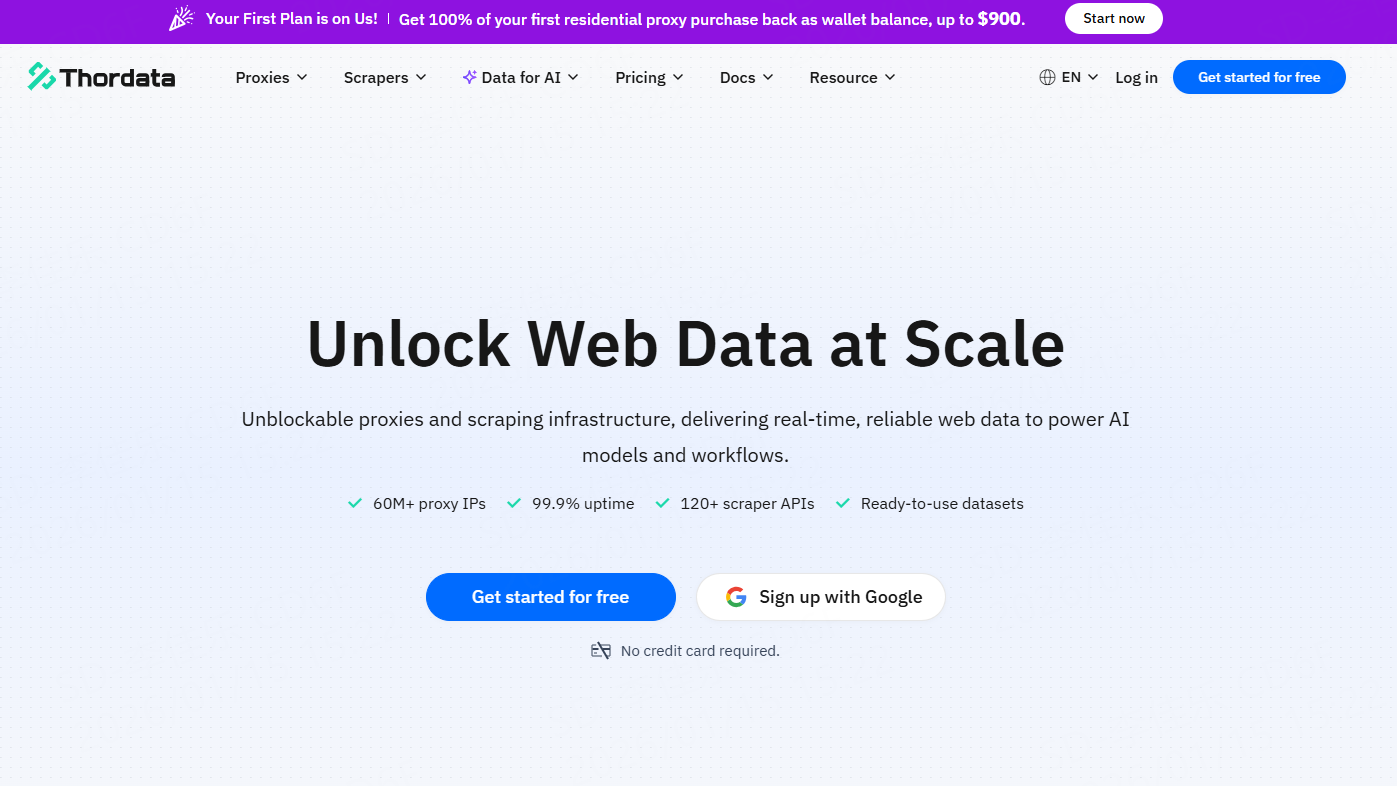
Thordata is the benchmark for real estate data scraping in 2026, with its dedicated Zillow Scraper capable of accurately and stably extracting various deep property data. Its Web Scraper API is not a generic scraper but is deeply focused on verticals like real estate, which means its underlying optimizations are fully targeted at the anti-scraping mechanisms of mainstream property platforms like Realtor, Zillow, and Redfin. For users looking to buy Web Scraping API to obtain property details in the U.S. and other regions, Thordata offers a “plug-and-play” solution.
Pros:
• Optimized specifically for real estate data structures, providing deeply cleaned and structured data fields.
• Optimization for anti-scraping strategies of real estate websites is well in place, leading in success rates and stability.
• Natively integrated residential proxies ensure extremely high request success rates.
• Offers highly competitive pricing and is recognized as the cheapest real estate API.
• Provides detailed documentation and a very simple API calling logic.
Cons:
• Compared to comprehensive platforms, it focuses more on capturing specific high-value data.

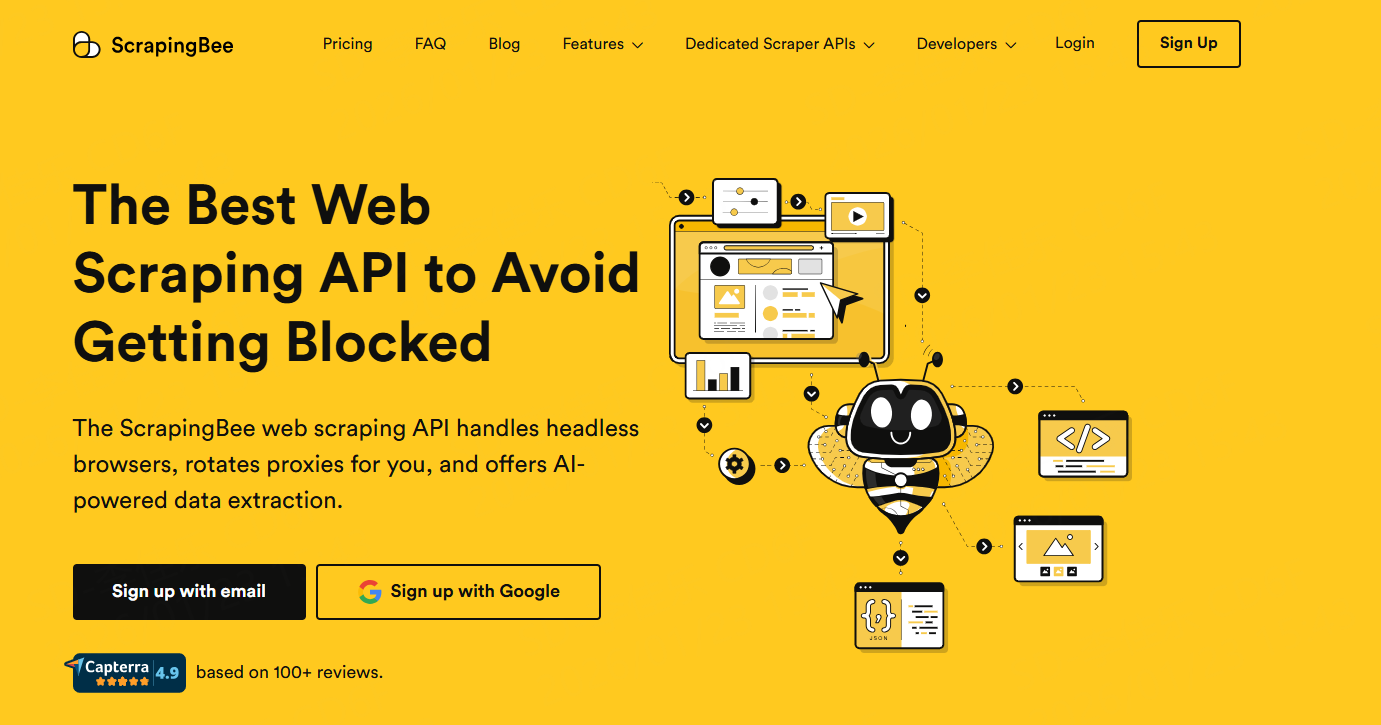
ScrapingBee is an excellent general-purpose Web Scraping API that solves many JavaScript dynamic loading issues on real estate websites by rendering headless browsers. If the sources you need to scrape are not limited to just a few large property platforms, but also include some regional websites or specific developer pages, the flexibility of ScrapingBee will be a great advantage.
Pros:
• Powerful JavaScript rendering capability, easily handling dynamic pages.
• Provides code samples in various languages (Python, Node.js, etc.), allowing for quick onboarding.
• Offers free call allowances, making it ideal for proof of concept in the early phases of a project.
Cons:
• Under extreme large-scale concurrency, response times may experience slight fluctuations.
• As a general API, its “specialized” optimization for anti-scraping on specific property websites may not be as effective as Thordata.
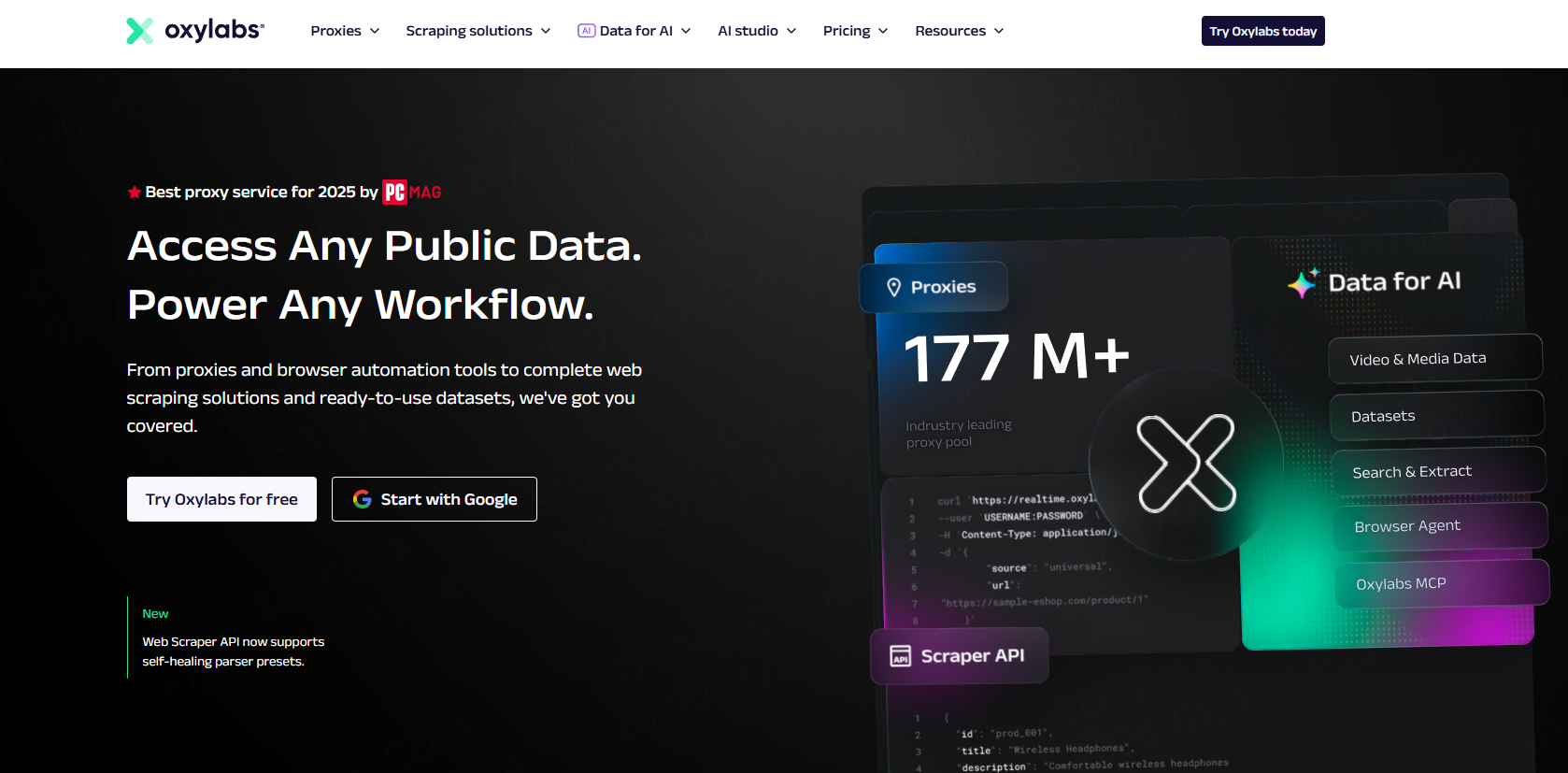
Oxylabs is a giant in web scraping infrastructure aimed at enterprise users, offering powerful yet complex solutions. For large real estate tech companies with extremely high data demands, near 100% success rate requirements, and dedicated technical teams for integration and optimization, Oxylabs is a strong competitor.
Pros:
• A large pool of proxy IPs and a distributed system can handle demanding scraping tasks.
• Mature solutions for anti-scraping on large e-commerce and real estate platforms are available.
• Offers enterprise-level SLA guarantees and 24/7 technical support.
Cons:
• With numerous features and configuration options, it is not very user-friendly for beginners.
• The dashboard and configuration options are quite complex.
• Achieving optimal results requires some configuration and tuning experience.
• Customized enterprise pricing leads to a relatively high entry barrier, making it unsuitable for small teams or individuals.
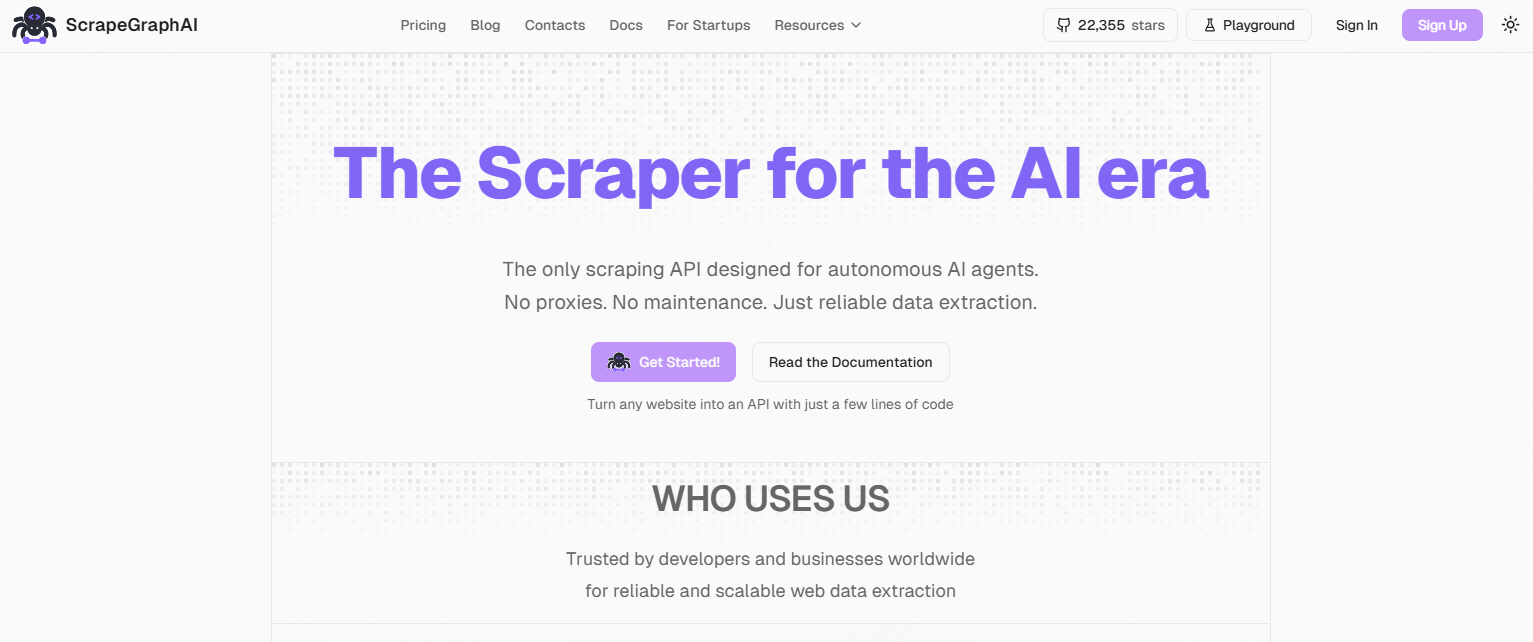
ScrapeGraphAI represents the emerging direction of AI-driven scraping, using large language models (LLM) to automatically identify and extract key fields from real estate web pages. This means you no longer need to manually write complex CSS selectors; AI will help you accomplish the task, It demonstrates tremendous potential for tasks with variable data structures or exploratory tasks.
Pros:
• You can describe your requirements in natural language, significantly lowering the technical barrier.
• Extremely high level of intelligence and adaptability.
• Able to automatically handle minor changes in page structure.
Cons:
• The inference cost of AI models is relatively high, leading to expensive per-request pricing.
• Occasionally requires human intervention for absolute precision in data extraction.
• The precision of natural language descriptions directly impacts result quality, requiring repeated tuning of prompts.
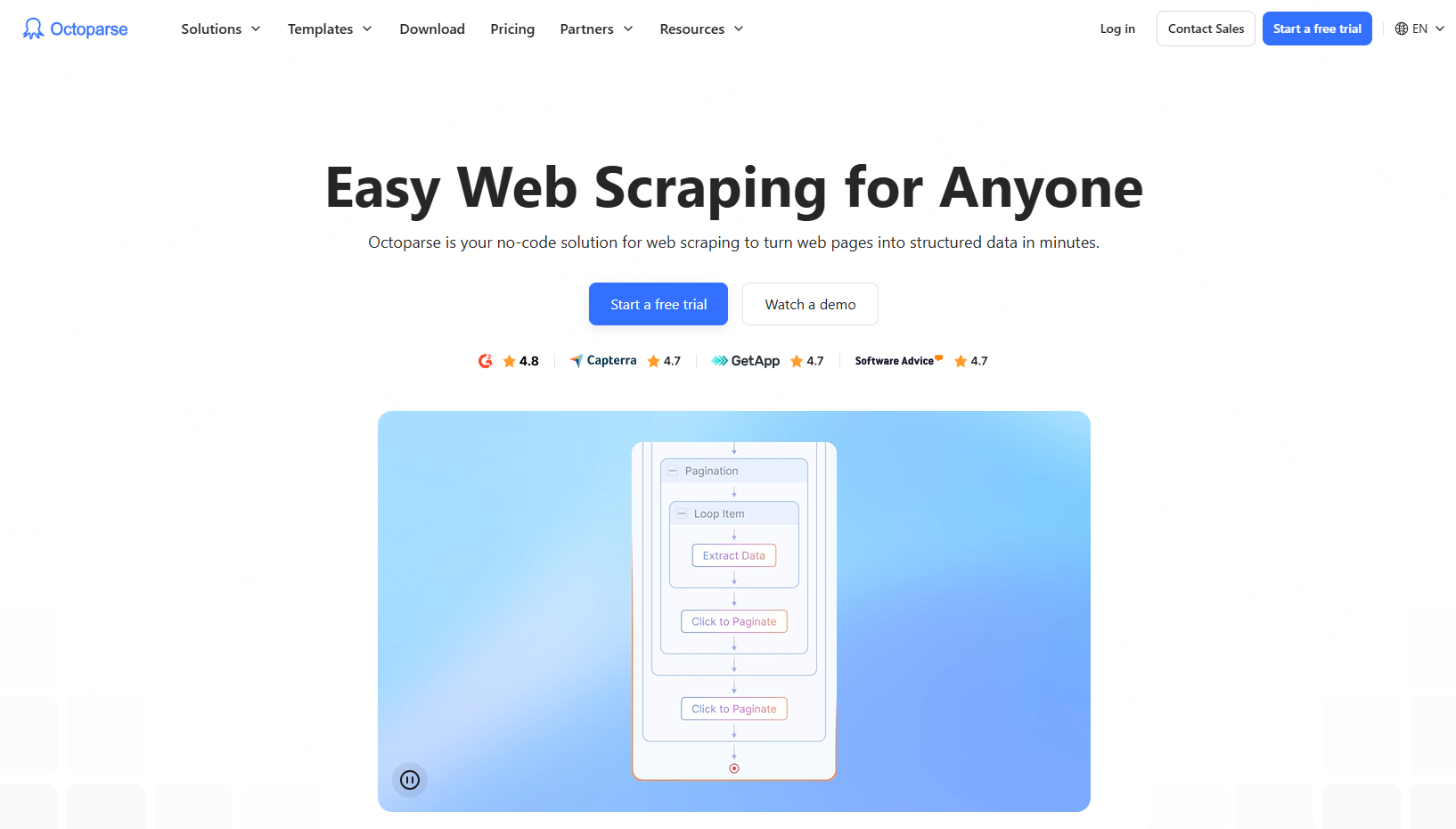
Octoparse is a leading visual scraping tool that allows users without coding background to easily scrape real estate through drag-and-drop operations. At its core is a powerful visual desktop client, enabling users to create complex scraping workflows through clicks. While business teams can define scraping rules on their own, they require the technical team to integrate data through APIs, making this model quite appealing.
Pros:
• Completely visual operations with an extremely low learning curve.
• Supports various data output formats, such as Excel and databases.
• Supports local execution of small tasks as well as cloud scheduling and API calls for large tasks.
Cons:
• Flexibility is not as strong as programming APIs when handling extremely complex interactive logic.
• Complex cloud scraping tasks may consume a large number of credits, requiring cost control awareness.
• When scraping large volumes of pages, the speed and stability of its cloud service may be inferior to purely API-driven solutions.
Choosing the right API is not just about price; it involves a comprehensive evaluation of technical metrics and business scenario compatibility. The following are the core factors you must systematically consider:
• Data targets and scale: Clearly define which websites you need to scrape data from, and the number of pages needed daily/monthly. This directly determines your requirements for the scale of web scraping proxy services and API concurrency capabilities.
• Data accuracy and success rate: A good real estate API should have an automatic retry mechanism. Whether it can automatically change IP addresses and retry when requests fail is a key measure of its professionalism.
• Quality of proxy pool: Quality providers will offer residential proxies, These proxies are harder to be identified as scrapers compared to datacenter proxies, significantly enhancing the success rate of scraping real estate.
• Compliance and ethics in web scraping: This is a crucial point. You must ensure that the chosen provider complies with privacy regulations such as GDPR and CCPA, and respects the target website’s robots.txt protocol, requesting at a reasonable rate to avoid burdening the target website.
• Reliability and technical support: Check the provider’s published historical status and SLA. Is there a clear retry mechanism and error logging when scraping tasks fail? How responsive and professional is the provider’s technical support? This is crucial for critical business data flows.
• Cost structure and predictability: Understand whether the pricing model is based on call cycles, data volume, or subscription fees. Calculate the total cost of your expected usage over the long term. Be wary of hidden fees, such as additional costs for handling JS rendering or using premium proxies.
By automating data collection, you can keep track of market dynamics in real time, gaining an edge in a fiercely competitive environment. Here are the potential advantages of scraping real estate data:
1. Accurate market valuation
Through real estate web scraping, you can obtain transaction prices and listing prices of similar properties nearby, thereby leveraging algorithmic models to provide the most accurate market valuations.
2. Automated lead generation
Scraping information on “for sale” or “urgent sale” properties can help agencies quickly identify potential sellers and establish efficient sales funnels.
3. Monitor competitor dynamics
You can monitor competitors’ pricing adjustments and changes in property inventory in real time, allowing you to dynamically adjust your business strategies.
4. Portfolio optimization
Large-scale real estate data enables investment institutions to conduct multi-dimensional risk analysis, identifying specific areas with high appreciation potential.
5. Build data products and services
By packaging cleaned and analyzed real estate data, you can create data subscription services or research reports targeted at investors, analysts, or financial institutions, opening up new revenue streams.
When scraping large amounts of data from real estate websites, you often encounter severe banning mechanisms, as the target platform typically deploys advanced firewalls to protect data ownership. Here are common challenges and corresponding solutions:
1. Anti-scraping mechanisms and CAPTCHAs
Large property websites like Zillow often use CAPTCHA and complex fingerprinting techniques. If you frequently make requests from the same IP, you will quickly be flagged.
• Solution: Implement dynamic IP rotation. By using a professional real estate web scraper API, you can automatically switch between different residential proxies, simulating the behavior of real users.
2. Frequent changes in website structure
Many modern property websites use React or Vue frameworks, and their content is dynamically loaded. Traditional HTML parsers cannot access this dynamically rendered information.
• Solution: You can use API providers that offer monitoring and alert services, or use more robust CSS selectors or XPath in your custom scripts.
Here is a simple Python example demonstrating how to use try-except and multiple selectors to enhance the stability of the code:
python

import requests
from bs4 import BeautifulSoup

def safe_extract_price(soup):
    price = None
    # Try various possible selectors
    selectors = ['.home-summary-row .ds-price', '[data-testid="price"]', '.price .srp-page-price']
    for selector in selectors:
        element = soup.select_one(selector)
        if element:
            try:
                price = element.get_text(strip=True)
                break # Stop upon finding
            except AttributeError:
                continue
    if price is None:
        # Trigger an alert to notify that the rule may have become ineffective
        print("Warning: Could not find the price element, please check if the page structure has been updated.")
    return price
3. Legal and compliance risks
Ignoring robots.txt, violating website terms of service, or scraping data at aggressive speeds can lead to legal action or permanent banning of the IP.
• Solution: Strictly follow the instructions in the robots.txt file, configure the scraper to mimic human browsing speeds, and add random delays between requests. Most importantly, consider using commercial web scraping API services, which often have clearer legal frameworks and cooperative bases with data sources, and incorporate compliance operations as part of their services, thereby transferring risks to professional providers.
Through this discussion, we hope you can clearly see that while real estate web data scraping is full of challenges, it has become highly feasible and efficient with modern tools—especially professional Real Estate Web Scraper API. Whether you choose the cost-effective Thordata or Oxylabs with a large proxy pool, the core is that you must shift away from the mindset of "pure scraping," and move towards a holistic view of "strategically acquiring, cleaning, and applying data." Assess your needs and make good use of free trial services, and always consider compliance and sustainability as prerequisites for technology selection. As data analysis technologies continue to evolve, those who can efficiently scrape real estate data will surely hold the high ground in future market competition.
We hope the information provided is helpful. However, if you have any further questions, feel free to contact us at support@thordata.com or via online chat.

<--!>
Frequently asked questions
What is the Best Real Estate API?
Based on comprehensive performance, ease of use, and technological maturity in 2026, Thordata is rated as the best API for real estate data scraping currently on the market, especially excelling in its specific optimizations for platforms like Zillow, providing high-quality, structured data.
What is the MLS API for Real Estate?
MLS API specifically refers to the official or authorized application programming interface used to access local multiple listing service systems. It is a formal channel for real estate agents to obtain the most authoritative and timely listing data. However, MLS data often has strict access restrictions. The public website web scraping discussed in this article is an alternative technical means to obtain publicly available property information, rather than a direct connection to the official MLS.
Can ChatGPT Scrape Data from a Website?
ChatGPT itself cannot directly function as a web scraper. It is a language model that does not have the capability to actively access the internet or send HTTP requests. However, it can generate code for web scraping (such as Python scripts) for you, or analyze the HTML content of web pages you provide to extract structured information. Actual scraping tasks still need to be completed through programming or using specialized web scraping tools/APIs.
What is the Cheapest Real Estate API?
"Cheapest" depends on your specific usage. For stable, medium-scale usage, Thordata offers the most attractive entry-level package, making it the preferred option for the cheapest real estate API. It is recommended to calculate the total long-term costs of various service providers based on your estimated usage.
<--!>
About the author
Anna is a content specialist who thrives on bringing ideas to life through engaging and impactful storytelling. Passionate about digital trends, she specializes in transforming complex concepts into content that resonates with diverse audiences. Beyond her work, Anna loves exploring new creative passions and keeping pace with the evolving digital landscape.
The thordata Blog offers all its content in its original form and solely for informational intent. We do not offer any guarantees regarding the information found on the thordata Blog or any external sites that it may direct you to. It is essential that you seek legal counsel and thoroughly examine the specific terms of service of any website before engaging in any scraping endeavors, or obtain a scraping permit if required.
 Looking for
Top-Tier Residential Proxies?您在寻找顶级高质量的住宅代理吗?
Looking for
Top-Tier Residential Proxies?您在寻找顶级高质量的住宅代理吗?
How to Scraping Dynamic Websites with Python?
In this article, learn how to ...
Anna Stankevičiūtė
2026-03-03
Scraping Yahoo Finance using Python
Xyla Huxley Last updated on 2026-03-02 10 min read […]
Unknown
2026-03-03
TCP Deep Dive with Wireshark
Xyla Huxley Last updated on 2026-03-03 6 min read TCP i […]
Unknown
2026-03-03
Web Scraping with Python using Requests
Xyla Huxley Last updated on 2026-03-03 6 min read Web c […]
Unknown
2026-03-03
Crawl4AI: Open-Source AI Web Crawler with MCP Automation
Xyla Huxley Last updated on 2026-03-03 10 min read AI a […]
Unknown
2026-03-03
Using Wget with Python: A Practical Guide for Reliable, Scalable Web Data Retrieval
Xyla Huxley Last updated on 2026-03-03 10 min read […]
Unknown
2026-03-03
How to Make HTTP Requests in Node.js With Fetch API (2026)
A practical 2026 guide to usin ...
Kael Odin
2026-03-03

How to Scrape Job Postings in 2026: Complete Guide
A 2026 end-to-end guide to scr ...
Kale Odin
2026-03-03

BeautifulSoup Tutorial 2026: Parse HTML Data With Python
A 2026 step-by-step BeautifulS ...
Kael Odin
2026-03-03
