


Web Scraper API
Fetch real-time data from 100+ websites,No development or maintenance required.
SCRAPING SOLUTIONS
Get accurate and in real-time results sourced from Google, Bing, and more.
With 120+ prebuilt and custom scrapers ready for any use case.
No blocks, no CAPTCHAs—unlock websites seamlessly at scale.
Execute scripts in stealth browsers with full rendering and automation
PROXY INFRASTRUCTURE
Over 100 million real residential IPs from genuine users across 190+ countries.
Reliable mobile data extraction, powered by real 4G/5G mobile IPs.
For time-sensitive tasks, utilize residential IPs with unlimited bandwidth.
Fast and cost-efficient IPs optimized for large-scale scraping.
SCRAPING SOLUTIONS
PROXY INFRASTRUCTURE
DATA FEEDS
Full details on all features, parameters, and integrations, with code samples in every major language.
LEARNING HUB
ALL LOCATIONS Proxy Locations
TOOLS
RESELLER
Get up to 50%
Contact sales:partner@thordata.com
Products $/GB
Fetch real-time data from 100+ websites,No development or maintenance required.
Get real-time results from search engines. Only pay for successful responses.
Execute scripts in stealth browsers with full rendering and automation.
Bid farewell to CAPTCHAs and anti-scraping, scrape public sites effortlessly.
Dataset Marketplace Pre-collected data from 100+ domains.
Over 100 million real residential IPs from genuine users across 190+ countries.
Reliable mobile data extraction, powered by real 4G/5G mobile IPs.
For time-sensitive tasks, utilize residential IPs with unlimited bandwidth.
Fast and cost-efficient IPs optimized for large-scale scraping.

Data for AI $/GB
Pricing $0/GB
Docs $/GB
Full details on all features, parameters, and integrations, with code samples in every major language.
Resource $/GB
EN $/GB
产品 $/GB
AI数据 $/GB
定价 $0/GB
产品文档 $/GB
资源 $/GB
简体中文 $/GB

The best buying signals in B2B aren’t in your CRM — they’re public. A prospect edits its pricing page, posts eight engineering roles, swaps its status-page vendor, publishes a migration blog post. Sales teams that monitor these surface changes systematically see intent weeks before the first call. This is a signal briefing: the six signals worth monitoring, why each one predicts budget, and the collection layer that makes watching 5,000 companies feasible.
Every B2B seller eventually hits the arithmetic of cold volume: more sequences, lower reply rates, same pipeline. The alternative isn’t a better email — it’s better timing. Buying intent leaks onto public web surfaces long before anyone fills out a demo form, and the teams that read those leaks consistently call earlier with context that reads like insider knowledge.
The signals below are ranked by lead time — how far ahead of the RFP each typically appears.
Signal 1: Careers page velocity. The highest-lead-time signal. A company opening eight backend roles with your category in the job description is building the team that will use your product — typically one to two quarters before budget exists. Collect job postings from prospect career pages (a subset of the 120+ pre-built targets in Thordata’s Scraper API — Indeed among them, plus raw residential collection for ATS-hosted pages at about $0.50–$1.00 per 1,000 results and $0.65–$2.00/GB respectively), and diff them weekly.
Signal 2: Pricing page edits. When a prospect restructures its own pricing, its internal tooling conversations are already happening — the pricing page is the symptom. A page-diff monitor on your top 500 prospects’ pricing pages is a few hundred requests a week, trivially cheap on per-result pricing.
Signal 3: Tech stack fingerprints. Scripts, SDKs, and status-page domains in page source reveal the vendor graph. A competitor’s SDK disappearing from a prospect’s site is a vacancy announcement your product can fill. This is structured-page collection at its cheapest — a light weekly crawl of key pages.
Signal 4: Blog and changelog mentions. Migration posts, “how we rebuilt X,” and engineering retrospectives name the pain your product solves, in the prospect’s own words. Feed these to the sales team as account context, not just as alerts.
Signal 5: Review-site activity. New G2 or review-platform entries from a prospect’s employees — both praising competitors and complaining about them — are unambiguous readiness signals. The review platforms sit behind aggressive anti-bot layers, which is what the unlocker tier (roughly $1.00–$1.30 per 1,000 responses) exists for.
Signal 6: Search visibility shifts. The demand-side mirror: when a prospect’s team starts researching your category, they search. Watching category keywords — who’s running ads, which comparison pages surface — through Thordata’s SERP monitoring solution at about $0.70 per 1,000 structured responses gives you the query side of intent, geo-pinned to each prospect’s market. It’s the one signal your competitors can’t see by visiting the same website you did.
A concrete build for watching 5,000 target companies:
| Signal | Collection method | Volume driver | Rough monthly cost |
|---|---|---|---|
| Careers pages | Scraper API per result | 5,000 companies × weekly | ~$100–200 at volume rates |
| Pricing/status page diffs | Light residential crawls | 2 pages × 5,000 × weekly | ~$50–150 (slider rates) |
| Tech-stack fingerprints | Residential, structured fetch | 1 page × 5,000 × weekly | ~$30–80 |
| Review platforms | Unlocker tier | Anti-bot cost per response | ~$50–100 |
| Category SERP signals | SERP API / managed monitoring | 500 keywords × daily | ~$300–450 |
The whole signal program prices out in the hundreds of dollars per month — a rounding error against a single AE’s quota, which is the correct frame for the budget conversation.
A careers-diff monitor in its minimal form:
from thordata import Thordata
import hashlib

client = Thordata(api_key="YOUR_API_KEY")

def signal_scan(company):
    jobs = client.scrape(
        scraper="indeed_company_jobs",       # or career-page collection
        query=company["domain"],
        output_format="json",
    )
    fingerprint = hashlib.md5(
        "|".join(sorted(j["title"] for j in jobs.result)).encode()
    ).hexdigest()
    changed = fingerprint != company.get("last_fingerprint")
    return {"company": company["name"],
            "open_roles": len(jobs.result),
            "signal": changed,                       # new or removed roles
            "relevant": any(KW in j["title"] for j in jobs.result
                            for KW in company["watch_keywords"])}
The relevant line is the whole product: a signal is only worth an alert if it maps to your category’s buying trigger, and the keywords are yours to define.
Collection is the easy half. Signal programs survive when they land somewhere actionable:
Isn’t this just web scraping our prospects? Is that okay?
These are public pages, visited at polite frequency, with managed rate-limiting built into the collection layer — the same posture as an SDR reading the same page by hand, at scale. The compliance-sensitive part is what you do with personal data in job postings; minimize what you store (titles and counts, not candidate names), and the program stays on the boring side of the line.
How many companies can one team realistically monitor?
The constraint isn’t collection cost — at the prices above, 50,000 companies is a budget line, not a project. The constraint is alert triage: 5,000 companies with tuned keywords produces a signal flow one RevOps person can curate weekly.
What’s the biggest mistake teams make?
Monitoring everything and alerting on everything. Six signals, ranked by lead time, with keyword relevance filters — the discipline is subtraction. The second-biggest mistake: skipping the search layer, because continuous SERP data crawling is the only signal that shows what prospects are *about to do* rather than what they just did.
We already have a buyer-intent data vendor. Why build this?
Third-party intent feeds tell you a company is researching a category; your own surface signals tell you *why* — the migration post, the eight job openings, the pricing restructure. The two together outperform either alone, and your own signals cost hundreds, not tens of thousands. Start the pilot with your top 200 accounts, the careers and pricing signals first, and SERP-side intent tracking on your highest-value category keywords — free trial credits cover the first month, and the first pricing-page alert that lands two weeks before a competitor’s cold email will close the internal debate.
 Looking for
Top-Tier Residential Proxies?您在寻找顶级高质量的住宅代理吗?
Looking for
Top-Tier Residential Proxies?您在寻找顶级高质量的住宅代理吗?
Website Change Monitoring with Proxies: How to Reduce False Alerts
Learn how to build a reliable ...
Jenny Avery
2026-09-30

Proxy Rotation Strategy for Web Scraping: When to Rotate IPs and When to Keep a Session
Build a practical proxy rotati ...
Jenny Avery
2026-09-24

How to Scrape Amazon Product Data for Price and Availability Monitoring
Learn how to build an Amazon p ...
Jenny Avery
2026-09-24
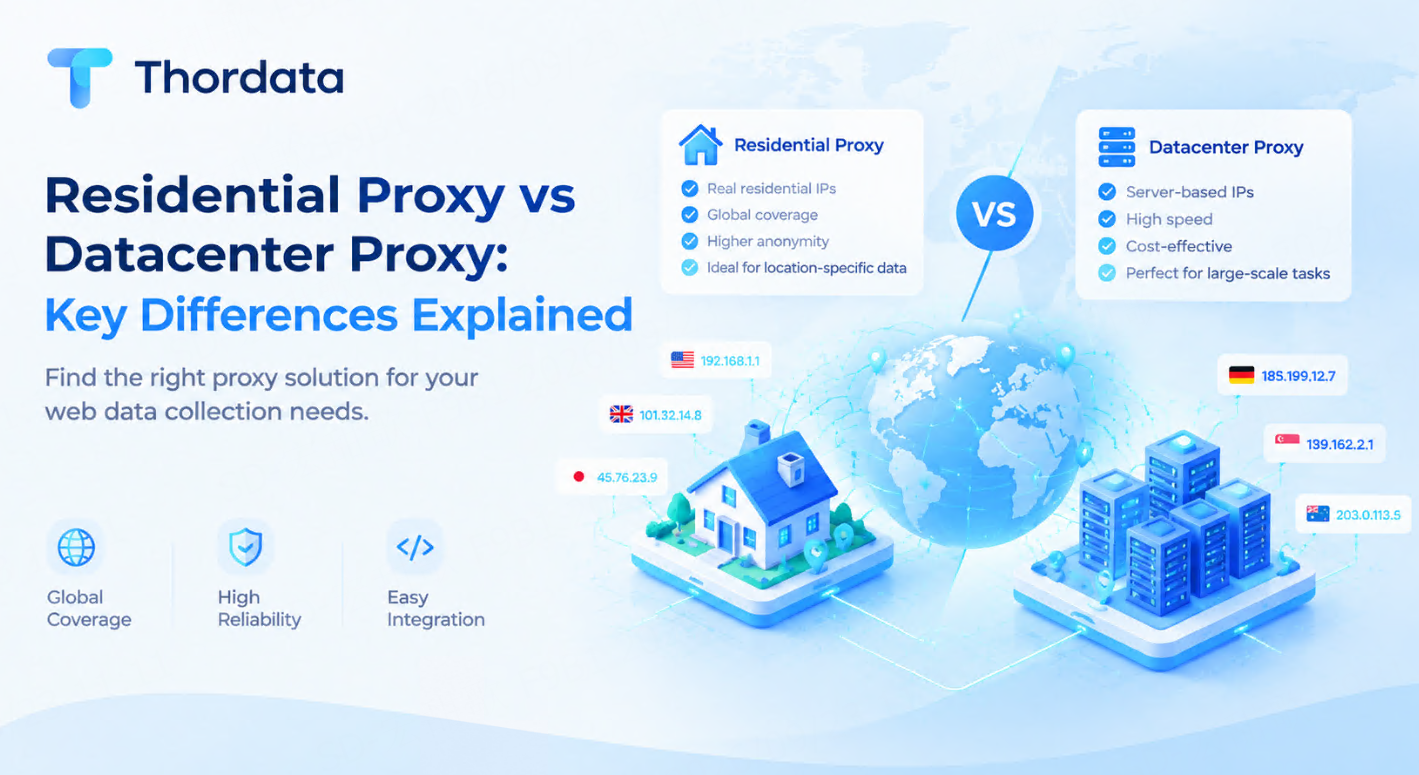
Residential Proxy vs Datacenter Proxy: Key Differences Explained
Learn the differences between ...
flora
2026-09-23

同一份工作負載,三種公司規模:Decodo 與 Thordata 的分階段計價
「哪個抓取平台更便宜」是錯的問題,因為答案隨成長而變。
Xyla Huxley
2026-09-22

行動 IP 是另一種產品:4G/5G、住宅與資料中心的訊號報告
買代理的人把「住宅」與「行動」當成同一種東西的兩個價格帶。
Xyla Huxley
2026-09-22

直接抄走這份設計文件:不會過時的影片推薦訓練資料
多數影片推薦系統的衰退,不是模型錯了,而是訓練資料凍住了—— ...
Xyla Huxley
2026-09-22

為什麼你的商品 Feed 永遠對不上供應商的:一份現場診斷
目錄錯配——同一個商品以三筆不同紀錄存在於你的 Feed、供 ...
Xyla Huxley
2026-09-22

90 秒完售:搶購監控團隊在倒數開始前就做錯的事
限量發售——球鞋、主機補貨、演唱會門票——是電商裡最惡劣的資 ...
Xyla Huxley
2026-09-22