


Web Scraper API
Fetch real-time data from 100+ websites,No development or maintenance required.
SCRAPING SOLUTIONS
Get accurate and in real-time results sourced from Google, Bing, and more.
With 120+ prebuilt and custom scrapers ready for any use case.
No blocks, no CAPTCHAs—unlock websites seamlessly at scale.
Execute scripts in stealth browsers with full rendering and automation
PROXY INFRASTRUCTURE
Over 100 million real residential IPs from genuine users across 190+ countries.
Reliable mobile data extraction, powered by real 4G/5G mobile IPs.
For time-sensitive tasks, utilize residential IPs with unlimited bandwidth.
Fast and cost-efficient IPs optimized for large-scale scraping.
SCRAPING SOLUTIONS
PROXY INFRASTRUCTURE
DATA FEEDS
Full details on all features, parameters, and integrations, with code samples in every major language.
LEARNING HUB
ALL LOCATIONS Proxy Locations
TOOLS
RESELLER
Get up to 50%
Contact sales:partner@thordata.com
Products $/GB
Fetch real-time data from 100+ websites,No development or maintenance required.
Get real-time results from search engines. Only pay for successful responses.
Execute scripts in stealth browsers with full rendering and automation.
Bid farewell to CAPTCHAs and anti-scraping, scrape public sites effortlessly.
Dataset Marketplace Pre-collected data from 100+ domains.
Over 100 million real residential IPs from genuine users across 190+ countries.
Reliable mobile data extraction, powered by real 4G/5G mobile IPs.
For time-sensitive tasks, utilize residential IPs with unlimited bandwidth.
Fast and cost-efficient IPs optimized for large-scale scraping.

Data for AI $/GB
Pricing $0/GB
Docs $/GB
Full details on all features, parameters, and integrations, with code samples in every major language.
Resource $/GB
EN $/GB
产品 $/GB
AI数据 $/GB
定价 $0/GB
产品文档 $/GB
资源 $/GB
简体中文 $/GB
Why Residential Proxies Matter for Scalable, Location-Accurate, and Reliable Data Collection
Web scraping often looks simple at the beginning. A few requests, a small parser, and a dataset starts to take shape. But once a scraping project moves beyond basic testing, the challenges become much more obvious: blocked requests, unstable sessions, inconsistent results by region, and workflows that break as soon as traffic increases.
That is where residential proxies become important.
Residential proxies are widely used in web scraping because they provide access through real residential IP addresses rather than datacenter IPs. For many public web data workflows, this can improve request reliability, strengthen geographic accuracy, and reduce the friction that appears when collecting data at scale.
In this article, we will look at what residential proxies are, why they matter for web scraping, and how to choose the right setup for different scraping tasks.
What Are Residential Proxies?
Residential proxies route internet traffic through IP addresses assigned to real households by internet service providers. In simple terms, the request appears to come from a regular residential user instead of a server environment.
This matters because many public websites evaluate traffic based not only on request structure, but also on the perceived origin of the connection. When requests come from datacenter IP ranges, they may be more likely to trigger restrictions, challenge pages, or access issues. Residential IPs often look more natural in comparison, which can improve access quality in many scraping environments.
That does not mean residential proxies are always the only answer. But for workflows that depend on stable public web access, they are often one of the most practical tools available.
Why Residential Proxies Are Useful for Web Scraping
1. Better Access to Public Websites
Many websites are more sensitive to traffic that appears automated or server-based. Residential proxies can help reduce this friction by making requests look closer to normal household traffic.
For scraping teams, this often means:
– fewer blocked requests
– higher success rates
– fewer repeated failures
– improved stability on more sensitive targets
2. Improved Geo-Targeted Data Collection
A large amount of web data is location-dependent. Search results, product pricing, ad placements, marketplace listings, and local business information can all change depending on the visitor’s region.
Residential proxies are especially useful when scraping workflows need:
– country-specific results
– state-level or city-level targeting
– localized SERP data
– region-based e-commerce information
In these cases, the goal is not only to access the page, but to access the *right version* of the page.
3. Better Fit for Browser-Based Workflows
Not all scraping is simple HTML extraction. Modern workflows often rely on:
– browser automation
– JavaScript rendering
– repeated page interactions
– multi-step navigation
– session continuity
In browser-heavy tasks, residential proxies can support more stable access when authenticity and session quality matter.
4. More Reliable Large-Scale Scraping
As scraping volume grows, even small inefficiencies become expensive. Retries, failed jobs, and inconsistent output all add cost.
Residential proxies can help improve large-scale operations by reducing the number of failed requests and improving the likelihood of getting usable responses on the first meaningful attempt.
Common Use Cases for Residential Proxies in Web Scraping
Residential proxies are widely used across many public web data scenarios. Some of the most common use cases include:
E-commerce and Marketplace Scraping
Teams collecting product data often need:
– pricing
– stock changes
– seller details
– category listings
– product variations
Because these pages may differ by region or be more sensitive to repeated access, residential proxies are often a good fit.
SERP and SEO Monitoring
Search engines return different results depending on region, device, and session conditions. Residential proxies help support:
– local rank tracking
– location-based SERP monitoring
– search result comparison across countries
– competitor visibility tracking
Ad Verification
Advertising teams often need to confirm how ads appear in different regions. Residential proxies can support:
– geo-based ad checks
– landing page verification
– regional ad delivery monitoring
Competitor Monitoring
When collecting competitor data across multiple public pages, residential proxies help improve access quality for:
– product tracking
– pricing changes
– category movement
– regional campaign monitoring
Public Web Research
Researchers, analysts, and technical teams often use residential proxies to gather publicly available data for:
– market analysis
– business intelligence
– operational dashboards
– trend monitoring
Residential Proxies vs Datacenter Proxies
A common question is whether residential proxies are always better than datacenter proxies.
The answer is no. The better choice depends on the task.
Datacenter proxies can still be useful for:
– early testing
– less sensitive targets
– lower-cost, high-volume collection on simpler sites
Residential proxies are often better when:
– the target site is more IP-sensitive
– geographic accuracy matters
– browser automation is involved
– access stability is more important than the lowest possible IP cost
– retries and failed jobs are becoming expensive
In many real-world scraping stacks, teams use more than one proxy type depending on the target and route.
Rotating vs Sticky Residential Sessions
Choosing residential proxies is only part of the decision. Session behavior also matters.
Rotating Residential Proxies
Rotating sessions are usually better for:
– broader collection tasks
– list and search page scraping
– workflows where IP diversity is useful
Sticky Residential Sessions
Sticky sessions are usually better for:
– browser-based tasks
– longer interactions
– repeated checks from the same session
– workflows where continuity matters
A strong scraping setup does not just ask, “Which proxy type should I use?” It also asks, “What session behavior does this task require?”
How to Choose Residential Proxies for Web Scraping
When evaluating residential proxies, it helps to look beyond price alone.
Important factors include:
Success Rate
A lower cost per GB is not always cheaper if it causes more retries and more failed runs.
Geographic Coverage
If your workflow depends on regional results, location targeting is essential.
Session Flexibility
The ability to choose between rotating and sticky behavior matters for different scraping tasks.
Scalability
A solution that works for a small test may not hold up when request volume grows.
Data Quality
The real goal is not just to retrieve a page. It is to retrieve a usable page with the right content and context.
Best Practices for Scraping with Residential Proxies
To get better results from residential proxies, keep these practical points in mind:
– Match proxy type to the task instead of using one default everywhere
– Separate search/list pages from detail pages when possible
– Treat location as part of data quality, not just access
– Measure success by usable results, not only by raw status codes
– Reduce unnecessary retries and wasted requests
– Use sticky sessions when continuity matters
– Rotate more aggressively when breadth matters more than continuity
These small decisions often have more impact than simply switching providers or increasing traffic volume.
Final Thoughts
Residential proxies are not just a technical add-on for web scraping. For many teams, they are part of the infrastructure that makes production-grade data collection possible.
They help improve access reliability, support geo-targeted workflows, and provide a stronger foundation for scraping tasks that need more than simple request volume. Whether the goal is collecting search data, monitoring e-commerce pages, verifying ads, or running browser-based automations, residential proxies often provide the realism and flexibility needed for more stable results.
For teams moving from testing into larger-scale scraping, understanding when and how to use residential proxies is an important step toward building a more reliable workflow.
 Looking for
Top-Tier Residential Proxies?您在寻找顶级高质量的住宅代理吗?
Looking for
Top-Tier Residential Proxies?您在寻找顶级高质量的住宅代理吗?
Best Residential Proxy Providers in 2026
Compare 5 residential proxy pr ...
Jenny Avery
2026-06-10

SERP Data Collection in 2026: When to Use a SERP API vs Managing Your Own Proxies
Compare SERP API vs residentia ...
Jenny Avery
2026-06-10

New Trends in Web Data Scraping in 2026: How Does Thordata’s Residential Proxy Solve the Anonymity and Stability Challenges?
When data becomes the oil of the new era, the scraping […]
Unknown
2026-06-10

Residential Proxies for AI Data Collection: A Practical Setup Guide
A practical guide to residenti ...
Jenny Avery
2026-06-10
Thordata Residential Proxy: The Ultimate Guide to AI-Powered Data Collection and Web Scraping Success
I’ll write a comprehensive, SE ...
Xyla Huxley
2026-06-10

How to Manage Multiple Social Media Accounts Without Getting Banned
Learn how to manage multiple F ...
Xyla Huxley
2026-06-10
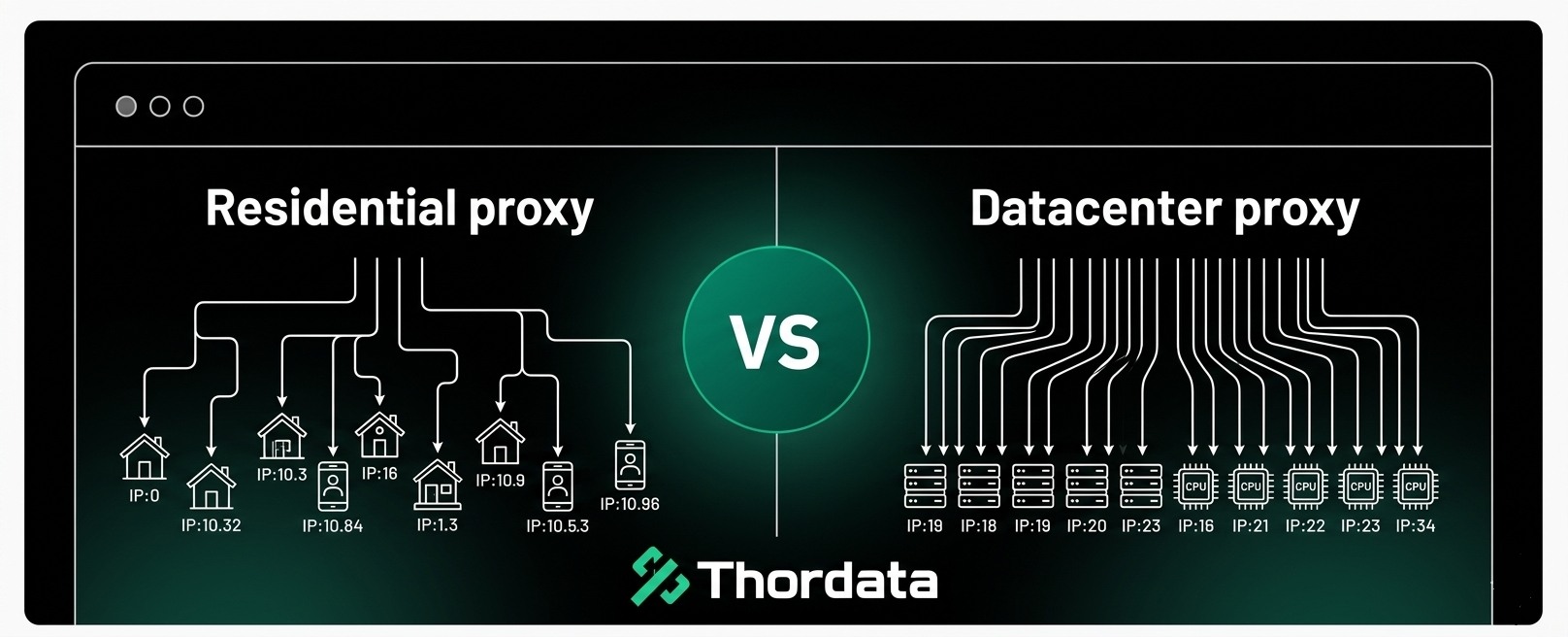
Residential Proxy vs Datacenter Proxy: Which Is the Best Proxy for Web Scraping?
Compare residential proxies an ...
Jenny Avery
2026-06-09
5 Best Fingerprint Browsers for 2026
Fingerprint browsers have beco ...
Xyla Huxley
2026-06-09

Unlimited Residential Proxies: When They Make Sense and How to Choose the Right Plan
Unlimited residential proxies ...
Xyla Huxley
2026-06-08